For Nigerian contractors, investing in concrete equipment is rarely just a matter of choosing a machine with sufficient output. A mixer may remain in service across several projects, move between sites, or become part of a contractor’s standard construction fleet. The more durable the investment, the more important it becomes to consider future workloads, project locations, labor availability, transport requirements, and the type of concrete work the company expects to undertake. A suitable mixer should therefore fit the contractor’s business trajectory rather than only solve the requirements of one current project.
This approach also changes how equipment costs are evaluated. Instead of looking only at the purchase figure, contractors can consider utilization, mobility, production control, operator requirements, and the likelihood that the machine will remain useful as project scopes evolve. A contractor focused on foundations may have different priorities from one handling roads, housing developments, industrial structures, or multiple smaller projects. Matching the self loading mixer configuration with that long-term pattern can make equipment ownership more practical and predictable.
Start With the Contractor’s Long-Term Project Profile
The first step is to identify what type of work the company intends to pursue over the next several years. Current project requirements provide useful information, but they should not become the only basis for equipment selection.
Consider Project Scale and Concrete Demand
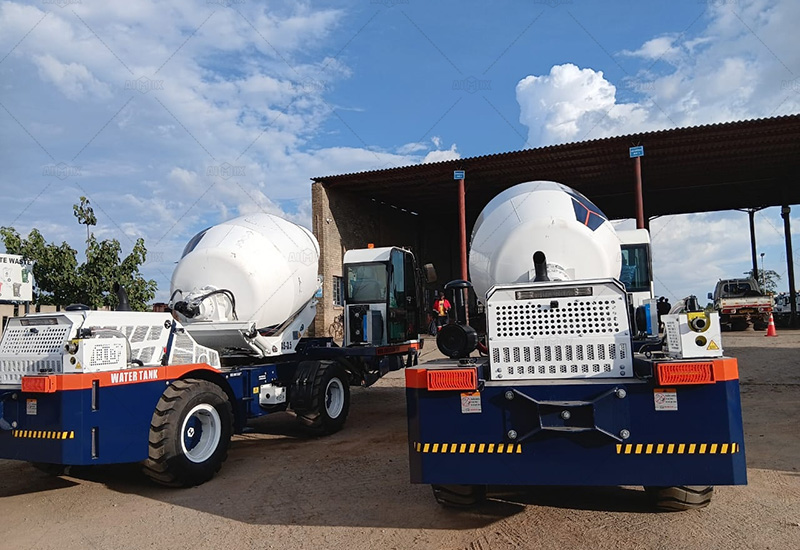
Contractors handling recurring medium-scale projects may need a different production arrangement from companies working on occasional large infrastructure contracts. A self loading concrete mixer machine can combine material loading, mixing, and concrete transportation within one unit, which may suit contractors whose work is distributed across several sites.
The important question is not simply how much concrete is needed today. It is whether the expected workload can keep the equipment adequately utilized after the current contract ends.
Look Beyond a Single Construction Sector
A mixer selected for residential construction may later be used for drainage works, road repairs, foundations, warehouses, or other civil projects. Equipment with practical mobility and independent material handling can provide greater operational flexibility when a contractor’s project portfolio is not concentrated in one sector.
Future Versatility Should Be Part of the Selection Criteria
Versatility does not mean choosing the largest or most complicated machine. It means selecting a configuration that can accommodate several realistic project scenarios without creating unnecessary operating complexity.

Match Equipment Investment With Business Expansion
Concrete mixer investment can also reflect how a contracting company plans to grow. A small contractor expanding gradually may prioritize equipment that can support multiple jobs without requiring a large fixed production setup.
Growing Contractors May Prioritize Mobility
When projects are geographically dispersed, equipment mobility becomes a strategic consideration. A mobile mixer can follow the work instead of requiring every project to establish a dedicated concrete production area. This can be particularly relevant when a contractor frequently changes project locations or undertakes short-duration construction packages.
For these buyers, the self loading concrete mixer price in Nigeria should be considered alongside transportation, site preparation, staffing, and expected utilization. A lower initial purchase figure does not necessarily represent the entire ownership picture.
Established Contractors May Need Higher Utilization
Larger contractors with a stable pipeline of concrete-intensive projects may focus more heavily on production continuity and equipment utilization. Their investment decisions can be based on how frequently the machine will operate, how easily it can be reassigned, and whether its output matches the company’s recurring workload.
Investment Timing Matters
Buying equipment too early can leave capital tied up in underutilized machinery. Waiting too long can create dependence on external concrete suppliers or rented equipment. The appropriate timing depends on the contractor’s confirmed workload, projected pipeline, and ability to keep the machine productive.

Evaluate Ownership Costs Beyond the Purchase Figure
The initial equipment quotation is only one component of a long-term investment decision. Nigerian contractors also need to consider fuel consumption, maintenance, operator requirements, transportation, spare parts, and downtime.
Compare Total Operating Requirements
When comparing the concrete mixer price in Nigeria, contractors can examine what is included in the equipment configuration and what additional resources will be required after delivery. A machine that reduces the number of separate operations may alter labor requirements and simplify site coordination.
Maintenance accessibility is another consideration. Equipment intended for long-term ownership should allow routine inspection, servicing, and replacement of commonly used components without unnecessarily complicated procedures.
Consider Equipment Utilization Across Multiple Projects
A mixer becomes more valuable when it can remain productive between contracts. Contractors can therefore evaluate whether the machine can move between housing projects, road construction, drainage works, industrial sites, and other concrete applications.
Calculate Practical Utilization Rather Than Theoretical Capacity
Maximum output figures describe machine capability, but actual utilization depends on working hours, material supply, site organization, concrete demand, and project scheduling. A machine with a moderate output that operates consistently may provide more practical value than a larger unit that spends long periods idle.
Use Equipment Investment to Build a More Flexible Fleet
Long-term equipment planning does not necessarily mean buying one machine for every type of project. Instead, contractors can gradually build a fleet in which each machine has a clear operational role.
Choose Equipment That Can Follow Changing Projects
For contractors expecting to expand into different regions or project categories, a flexible mixer can become a reusable production asset. This is especially relevant when construction schedules overlap and equipment needs to be reassigned quickly.
When evaluating a mini concrete mixer for sale in Nigeria, contractors can therefore examine not only its current application but also its likely role in future projects. Transportability, production method, loading arrangement, and site accessibility can all influence this decision.
Build Around a Realistic Growth Strategy
A practical investment plan should connect equipment purchases with expected business development. A contractor beginning with smaller civil works may start with a compact and mobile configuration, then add higher-capacity equipment as the project portfolio becomes more stable.
Equipment Should Support the Business, Not Define It
The objective is to create an equipment structure that remains useful as contracts change. By matching mixer capacity, mobility, operating requirements, and utilization with the company’s long-term project profile, Nigerian contractors can make equipment investment decisions based on operational continuity rather than short-term specifications alone.
Comments
No comments yet. Be the first to react!