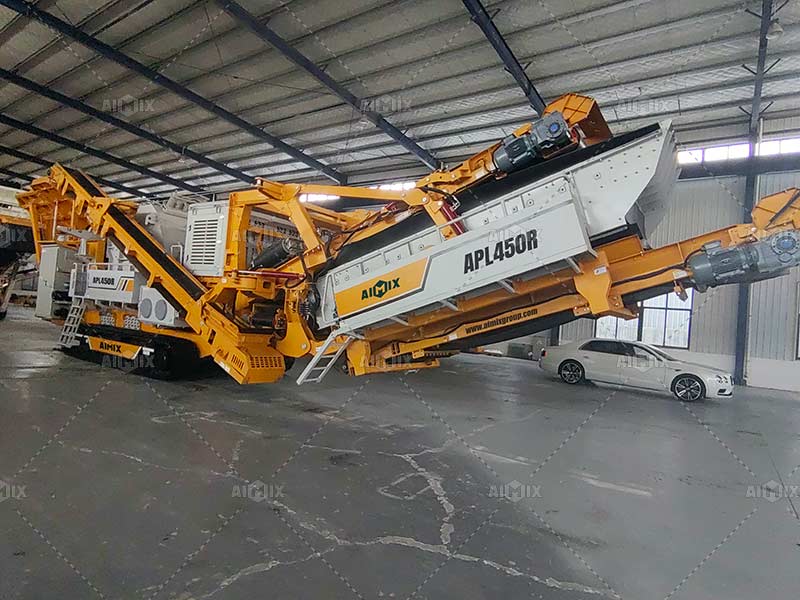
Construction waste recycling is not simply a matter of selecting a crusher with sufficient capacity. The physical arrangement of the project site can determine whether a crusher operates efficiently or becomes a bottleneck. Available space, material flow, access routes, stockpile locations, power availability, and the distance between demolition and processing areas all influence equipment selection. A crusher that performs well in an open recycling yard may be poorly suited to a confined urban redevelopment site. For this reason, crusher selection should begin with the site rather than the machine specification sheet. The objective is to create a coherent material flow in which waste can move from collection to crushing, screening, and stockpiling with minimal unnecessary handling. When site layout and crusher configuration are considered together, contractors can reduce internal transportation, simplify operations, and make better use of limited working space.
How Site Constraints Shape Crusher Selection
Available Space Determines the Suitable Crusher Configuration
Space is one of the first constraints to evaluate on a construction waste recycling site. Urban demolition projects, infrastructure renovations, and commercial redevelopment sites often provide only a restricted processing area. There may be buildings, temporary structures, roads, utilities, or safety zones occupying much of the available ground. A large stationary crushing plant may offer substantial processing capacity, but its fixed layout can be impractical where space is fragmented or temporary. A compact crusher, mobile crusher, or more streamlined crushing arrangement may provide greater operational flexibility. The issue is not simply whether the crusher physically fits. Adequate clearance is also required for feeding, discharge, maintenance, equipment movement, and material stockpiling. A machine squeezed into an unsuitable location can create congestion and make routine maintenance unnecessarily difficult.

Access Routes Influence Crusher Mobility
Construction sites rarely remain static. Demolition progresses, structures disappear, and new construction zones emerge. Consequently, the optimal crusher position can change during the project. Mobile crushers are particularly advantageous when material sources are distributed across different areas. Instead of repeatedly transporting bulky construction waste to one fixed processing point, the crusher can be repositioned closer to the demolition or excavation area. This reduces hauling distances and limits the amount of secondary handling. However, mobility must be assessed against actual site access. Narrow entrances, low-clearance structures, steep gradients, weak ground, or congested internal roads may restrict the movement of larger equipment. Crusher dimensions, transport method, turning radius, and ground conditions therefore become part of the selection process.
Material Flow and Crusher Position Must Be Planned Together
Feed Distance Affects Recycling Efficiency
A well-designed recycling site should establish a logical sequence from waste generation to finished aggregate. If construction debris must travel long distances before reaching the crusher, transportation can consume significant time and fuel. Ideally, the crusher should be positioned close enough to the primary waste accumulation area to reduce unnecessary haulage while maintaining safe separation from active demolition operations. This balance is particularly important when concrete, masonry, asphalt, and mixed construction debris are processed continuously. The type of feeding equipment also matters. Excavators, wheel loaders, conveyors, and dump trucks require sufficient maneuvering space around the crusher. A compact crusher may therefore be preferable not because its crushing capacity is inherently superior, but because its footprint allows a more efficient feed arrangement.
Discharge and Stockpile Areas Require Equal Attention
Crusher selection should not stop at the feed opening. The discharge side can determine whether the entire recycling process remains fluid. Crushed material needs somewhere to go. If the discharge area is too confined, finished aggregate can accumulate around the crusher and eventually obstruct production. Where screening is included, additional space is required for the screen, conveyors, and separate stockpiles.
Matching Discharge Layout With Final Aggregate Requirements
Different recycling projects may produce several aggregate sizes. Recycled concrete aggregate, road base material, and general construction fill may require different specifications. A concrete crusher for sale with an integrated screening arrangement or compatible downstream equipment can simplify the site layout. Instead of repeatedly moving processed material with loaders, conveyors can establish a more continuous flow from crushing to screening and stockpiling. This reduces cross-traffic within the site. It also makes the material flow easier to supervise.

Dust, Noise, and Safety Zones Affect Equipment Placement
Construction waste recycling can generate dust, noise, vibration, and vehicle movement. These factors influence where crushing equipment can safely operate. A crusher positioned too close to occupied buildings, public roads, workers, or sensitive equipment may create avoidable environmental and safety challenges. At the same time, placing the crusher too far from the waste source can increase transportation requirements. Site layout therefore requires a compromise between processing efficiency and operational separation. Dust suppression systems, enclosed transfer points, water access, noise-control measures, and designated traffic routes should be considered alongside the crusher itself.
Choosing the Crusher Based on the Complete Site Workflow
Mobile and Stationary Crushers Serve Different Layout Conditions
The mobile-versus-stationary decision is fundamentally a site-layout decision. A stationary crusher can be advantageous when the recycling operation has a stable footprint, sufficient space, and a predictable material supply. Once installed, it can form part of a structured processing line with dedicated feeding, screening, and conveying equipment. A mobile crusher is often more suitable when the site changes frequently or when construction waste is generated across multiple locations. Its mobility can reduce the need to transport unprocessed waste over long distances. Neither configuration is universally better. The appropriate choice depends on how material moves through the specific project site.
Evaluate Crusher Selection Through the Entire Recycling Cycle
The most effective approach is to map the complete workflow before selecting the machine:
Waste Generation → Feeding → Crushing → Screening → Stockpiling
Each stage should have sufficient space, suitable access, and a logical connection with the next stage. If one section creates a bottleneck, increasing crusher capacity alone may not solve the problem. For example, a high-capacity crusher has limited practical value if trucks cannot approach the feed hopper efficiently or if the discharge area becomes overloaded with recycled aggregate. Conversely, a moderately sized track mounted crusher with a well-planned layout may achieve better real-world productivity because material moves continuously through the system. Ultimately, site layout should be treated as a primary crusher-selection criterion rather than an afterthought. The best crusher for construction waste recycling is not necessarily the machine with the largest capacity or most powerful engine. It is the machine whose configuration, mobility, footprint, feeding method, and discharge arrangement fit the physical realities of the site. When crusher selection begins with material flow and spatial constraints, recycling operations become more orderly and less dependent on unnecessary material handling. The result is a processing system designed around the site itself—more coherent, more adaptable, and better positioned to turn construction waste into useful recycled aggregate.
Comments
No comments yet. Be the first to react!