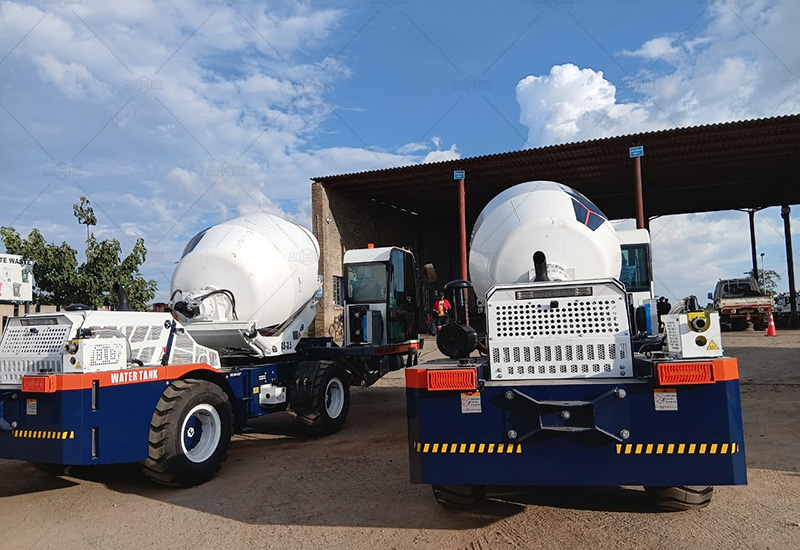
Urban building projects can significantly influence how contractors invest in concrete production equipment. As cities expand, construction activity often includes residential buildings, commercial properties, public facilities, mixed-use developments, and supporting infrastructure. These projects create different patterns of concrete demand. Some require continuous production for structural work, while others involve smaller and intermittent batches for foundations, columns, slabs, and auxiliary structures. As a result, equipment investment is increasingly shaped by the practical requirements of individual projects rather than by machine size alone.
For contractors evaluating a concrete mixer in Ethiopia, urban construction conditions can affect decisions about capacity, mobility, automation, and long-term operating costs. Limited site space, changing work schedules, labor availability, material supply, and transportation conditions all influence which equipment configuration is appropriate. The investment decision therefore extends beyond the initial purchase. Contractors must consider how efficiently the equipment can support concrete production throughout different stages of an urban building project.
Urban Building Growth Changes Concrete Production Requirements
Different Building Types Create Different Demand Patterns
Urban construction does not create a uniform demand for concrete. A multi-story residential building may require substantial volumes during foundation and structural stages, followed by lower concrete consumption as finishing work progresses. Commercial buildings can have different schedules, while smaller developments may need concrete only at specific intervals.
This variation affects equipment investment. Contractors working on repeated medium-scale projects may prefer equipment that can provide consistent production without the infrastructure requirements of a large batching facility. Larger contractors managing several simultaneous projects may require more substantial production capacity.
Foundation Work Often Creates an Early Production Peak
Excavation and foundation construction can generate intensive concrete demand during the early phase of a building project. Footings, foundation beams, retaining structures, columns, and base slabs may require significant quantities within a relatively short period.
Equipment must be capable of responding to this concentrated demand. However, purchasing a large production system solely for the foundation stage may not always be economical if concrete consumption decreases significantly later in the project.
Restricted Urban Sites Influence Equipment Size
Construction sites in growing urban areas are often surrounded by existing buildings, roads, commercial activity, and residential developments. Available working space may be limited.
A large concrete production installation can compete with aggregate storage, reinforcement preparation, formwork, cranes, material deliveries, and worker access. Consequently, contractors may place greater value on compact equipment that can fit into a restricted site layout.

The physical footprint of a concrete mixer can therefore become an important investment factor. A machine does not operate in isolation. It must coexist with the entire construction ecosystem around it.
How Project Conditions Influence Concrete Mixer Investment
Production Capacity Must Match Actual Project Demand
One of the most important investment decisions involves selecting the appropriate production capacity. Higher output may appear advantageous, but unused capacity can increase equipment costs without producing a corresponding benefit.
Contractors need to examine average daily concrete demand, peak pouring periods, working hours, and the expected duration of each construction phase. A properly matched self loading mixer concrete can provide sufficient output while avoiding excessive investment in oversized equipment.
Capacity should therefore be viewed as a functional requirement rather than a simple indicator of machine quality.
Mobility Can Improve Equipment Utilization
Urban contractors may complete projects at different locations over relatively short periods. Once concrete work is finished at one site, the equipment may be required elsewhere.
Mobile or easily transportable equipment can improve asset utilization by allowing contractors to move the production system between projects. This reduces the risk of purchasing equipment that remains inactive after a single construction phase is completed.
Relocation Costs Should Be Considered
Mobility is not simply a technical feature. It has economic consequences. Equipment that requires extensive dismantling, transportation, and reinstallation can generate additional labor and time costs whenever a project changes.
For contractors managing multiple urban developments, easier relocation can become a meaningful advantage over the equipment’s operating life.
Labor Availability Also Affects Equipment Selection
Concrete production traditionally depends on several repetitive activities, including loading aggregates, adding cement, measuring water, mixing, and transporting fresh concrete.
Equipment that integrates or simplifies some of these functions can reduce the number of manual operations required. This does not eliminate the need for skilled operators and quality control, but it can make the production process more organized and less dependent on fragmented manual work.
As construction schedules become tighter, predictable production processes may become increasingly valuable.
Why Concrete Mixer Price and Operating Costs Shape Investment Decisions
The Initial Purchase Price Is Only One Part of the Investment
When contractors compare concrete mixer price in Ethiopia, the machine’s purchase price is naturally an important consideration. However, the lowest quotation does not necessarily represent the lowest long-term cost.

Fuel or electricity consumption, maintenance requirements, spare parts, transportation, labor, and equipment utilization can all influence the actual economic value of the investment. A cheaper machine that requires frequent repairs or consumes excessive fuel may become more expensive during its operating life.
For this reason, contractors should compare total ownership costs rather than focusing exclusively on the initial equipment price.
Material Handling Can Affect Overall Productivity
Concrete production depends on a continuous flow of aggregates, cement, water, and other materials. If material handling is inefficient, the mixer may spend significant periods waiting rather than producing concrete.
Urban building projects can make this issue more pronounced because delivery schedules and storage areas may be restricted. Equipment investment should therefore consider how easily materials can be supplied to the mixer within the available site layout.
A Balanced System Reduces Operational Bottlenecks
The mixer is only one part of the production process. Aggregate supply, cement storage, loading equipment, water availability, and concrete transportation must operate at compatible rates.
A highly productive mixer cannot compensate for an inefficient material supply system. Similarly, additional supporting equipment may provide little value if the project’s concrete demand remains modest. Investment decisions should consider the complete production sequence.
Future Project Use Influences the Value of the Equipment
A contractor purchasing a large concrete mixer should also consider future applications. Equipment selected for one urban building project may later be used for housing developments, commercial structures, infrastructure works, or other concrete-intensive activities.
Versatility can improve long-term utilization. A machine that can adapt to different project sizes and operating conditions may provide greater value than equipment designed around a single narrowly defined application.
Urban Construction Encourages More Strategic Equipment Investment
Urban building development in Ethiopia influences concrete equipment investment by creating a combination of practical demands. Contractors need adequate production capacity, but they may also face limited site space. They require reliable concrete supply, yet demand can fluctuate between construction stages. Equipment may need to remain at one site for months or move between multiple projects.
These variables encourage a more selective approach to machinery investment. The appropriate concrete mixer in Ethiopia depends on the contractor’s typical project profile, expected concrete volume, available labor, site conditions, and future equipment utilization.
Price remains important, but it should be evaluated alongside productivity and operating requirements. When comparing concrete mixer price in Ethiopia, contractors can achieve a clearer investment decision by examining capacity, fuel consumption, maintenance, mobility, material handling, and after-sales support together.
Ultimately, urban construction does not necessarily require the largest concrete production equipment. It requires equipment that fits the construction environment. A properly matched mixer can support foundation work, structural concrete production, and multiple future projects without creating unnecessary operational complexity. As urban building activity continues to diversify, the most valuable equipment investment is likely to be the one that balances production capability with the realities of the jobsite.
Comments
No comments yet. Be the first to react!