
The construction of durable, high-quality concrete road pavements requires a precise alignment between the paver machine’s engineering parameters and the project’s specific design criteria. It is not sufficient to simply possess a paving machine; one must possess the correctly configured machine for the unique demands of each project. Three critical parameters govern this alignment: the vibration frequency applied to the fresh concrete, the designed mat thickness, and the spanning capacity of the machine relative to the road’s geometry. Selecting a paver without a rigorous analysis of these factors invites a spectrum of failures, from inadequate consolidation and surface degradation to structural cracking and profile irregularities. This guide provides an authoritative framework for matching machine capabilities to project specifications, ensuring optimal performance, longevity, and return on investment.
Vibration Frequency: The Determinant of Consolidation Quality
The vibration system of a concrete road paver is not a simple on-off mechanism; it is a sophisticated tool for controlling the density and surface characteristics of the pavement. The frequency, measured in Hertz (Hz) or vibrations per minute (VPM), must be selected based on the concrete mix’s workability, slump, and aggregate gradation. A mismatch at this fundamental level compromises the entire pavement structure.
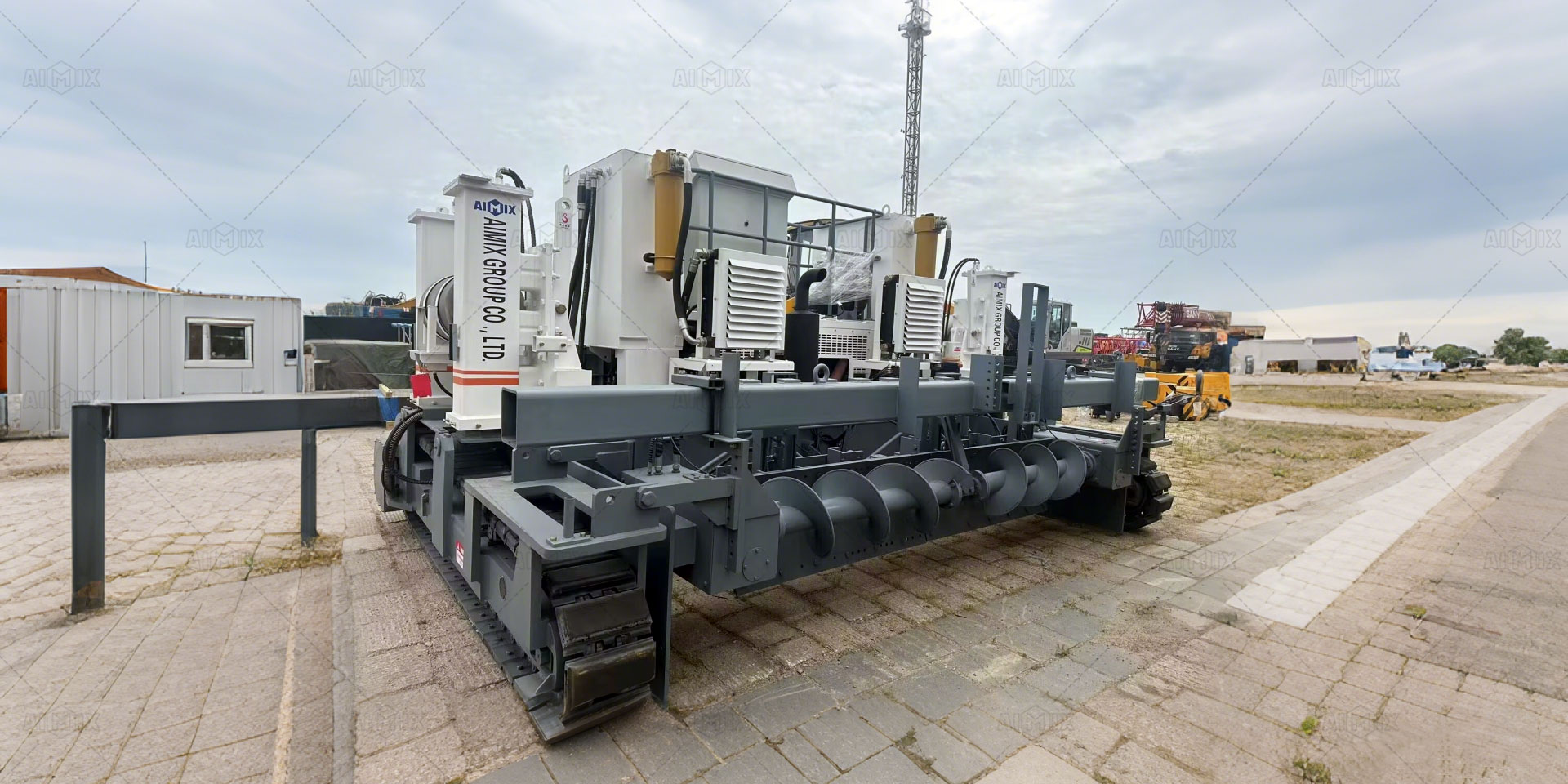
For low-slump, stiff mixes typical of high-performance pavements, higher vibration frequencies are required to fluidize the concrete momentarily, allowing it to consolidate under the paver’s weight and achieve maximum density. Frequencies in the range of 3,000 to 4,000 VPM are common for such applications. Insufficient frequency leaves voids and honeycombing, drastically reducing strength and freeze-thaw resistance. Conversely, for higher-slump mixes or slipform applications where the concrete must maintain its shape immediately after the paver passes, lower frequencies or even tamping-only systems may be employed to prevent over-vibration, which can cause segregation of the aggregate and a weak, laitance-rich surface. The machine’s control system must allow for precise, adjustable frequency settings to tune the consolidation effort to the exact rheology of the delivered mix. Projects involving high-speed roadways or heavy-duty industrial pavements demand this level of control.
Mat Thickness: Structural Capacity and Compaction Energy Requirements
The designed thickness of the concrete mat is a direct reflection of the anticipated structural loads. A residential street with a 150mm (6-inch) slab has fundamentally different compaction energy requirements than a 400mm (16-inch) airport runway or a heavy-haul trucking corridor. The concrete road paver machine must be capable of delivering the compaction energy necessary to achieve specified density throughout the full depth of the mat.
For thicker pavements, the paver requires greater deadweight and more powerful, high-amplitude vibration systems to transmit energy to the lower lift of the slab. Machines with heavier chassis and robust screed assemblies are essential. Furthermore, the paving process for thick mats may require multiple passes or the use of dowel bar inserters, which impose additional dynamic loads on the machine. Selecting a paver with insufficient weight or vibration amplitude for a thick pavement project will result in a mat that is well-compacted only at the surface, with a progressively less dense, structurally deficient zone below. This differential compaction leads to premature failure under load. The machine’s specifications must be cross-referenced with the project’s thickness requirements and the specified compaction method to ensure it has the requisite power and mass.

Spanning Width and Geometric Adaptability
The physical span of the paver determines its ability to place the full width of the pavement in a single pass, a critical factor for both efficiency and pavement uniformity. The machine’s frame and screed must be configured to match the road’s lane widths, shoulders, and any variable cross-sections.
For projects with standard, consistent lane widths, a fixed-width paver with hydraulically extendable screeds offers the necessary flexibility within a reliable mechanical envelope. However, for projects involving super-wide pavements, such as airport aprons or multi-lane highways, a machine with a larger basic frame and high-capacity screed extensions is mandatory. Paving a 15-meter wide apron in a single pass eliminates a longitudinal construction joint, a primary source of future pavement distress and water infiltration. Additionally, the machine’s ability to maintain precise grade and slope control across its full span—through advanced sensor systems referencing stringlines or 3D models—is non-negotiable for achieving the specified profile. The paver must also accommodate variable mat thickness across its width, such as in crowned road sections, requiring independent control of screed functions. Matching the machine’s geometric capabilities to the project’s plan view and cross-section eliminates joint-related failures and ensures a smooth, uniform riding surface. The selection process, therefore, is a precise engineering exercise: matching vibration to mix design, compaction energy to mat depth, and physical span to road geometry.

Comments
No comments yet. Be the first to react!