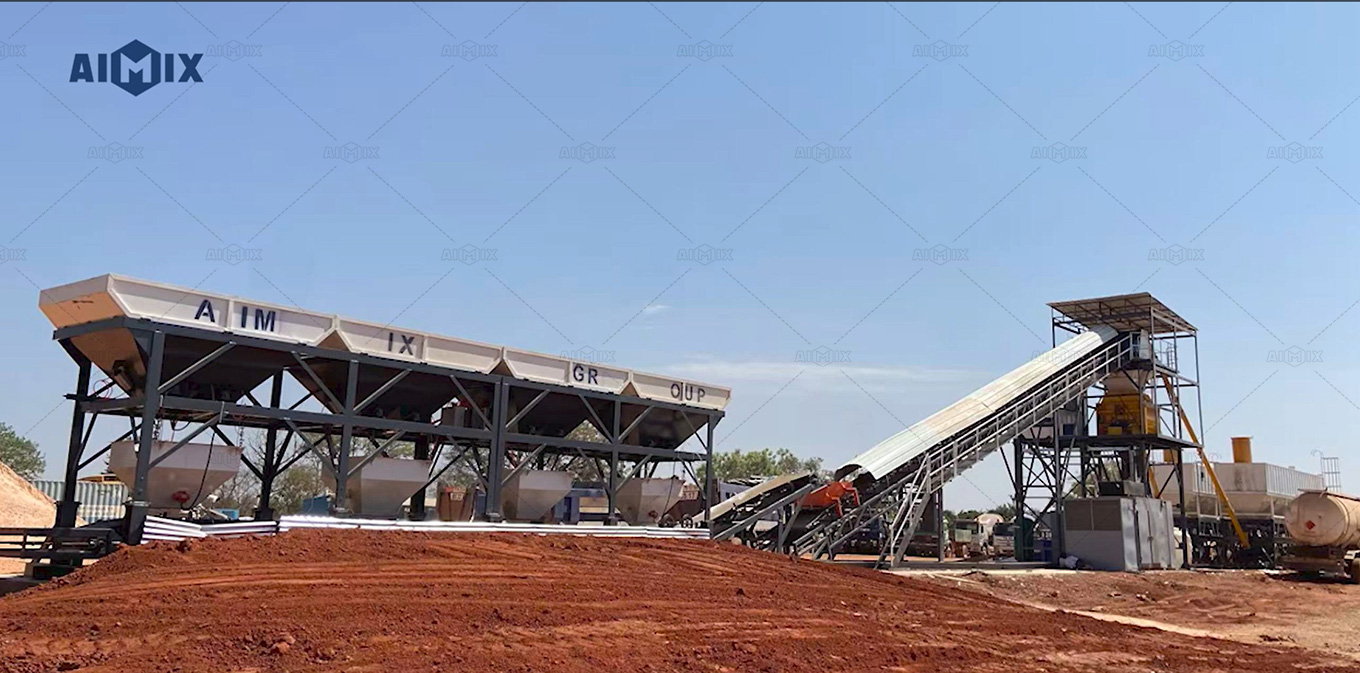
Malaysia’s construction sector is advancing at a pace that demands precision, volume, and unwavering consistency. From the gleaming corridors of Kuala Lumpur’s expanding transit network to the sprawling industrial parks taking shape across Selangor and Johor, the appetite for high-performance concrete has never been more acute. Meeting that appetite requires more than raw material availability — it demands a production infrastructure capable of sustaining output at scale, without sacrificing mix integrity or schedule adherence. Stationary concrete batching plants have become the backbone of this capability, quietly powering some of the most ambitious construction programs the country has ever undertaken.
For project managers, civil engineers, and infrastructure developers operating under demanding delivery timelines, the question is rarely whether concrete is available — it is whether the right concrete can be delivered in sufficient volume, at the right moment, without compromise. Stationary plants answer that question with a resoluteness that mobile or transit-mixed alternatives simply cannot replicate at equivalent scale. Understanding how these installations function, and why they are so well-suited to Malaysia’s high-volume construction environment, is essential knowledge for any stakeholder navigating the country’s infrastructure growth trajectory.
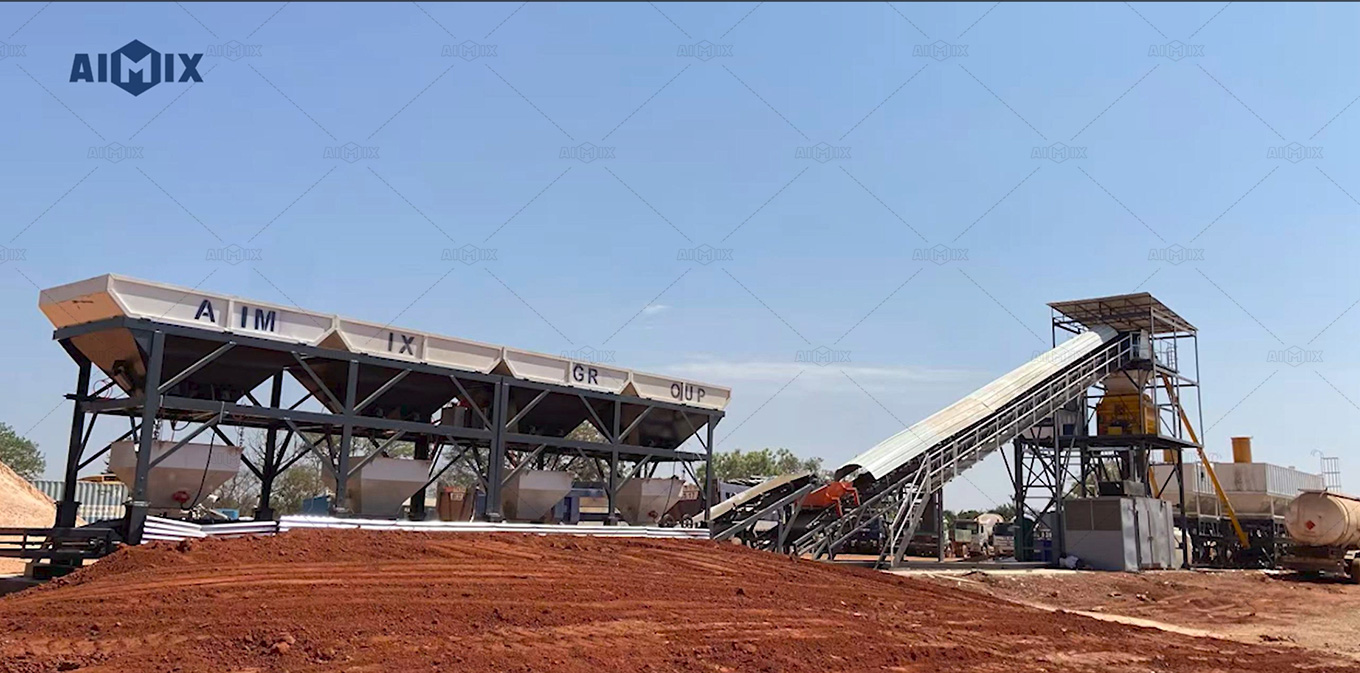
The Structural Demands of High-Volume Construction in Malaysia
Infrastructure Expansion and Concrete Intensity
Malaysia’s infrastructure pipeline is formidable. The ongoing expansion of the Klang Valley Mass Rapid Transit system, the development of the Pan Borneo Highway across Sabah and Sarawak, and a succession of large-scale industrial zone developments collectively represent an extraordinary demand for structural concrete. These are not projects that can tolerate supply intermittency. A single delayed concrete pour on a bridge deck or tunnel lining can cascade into multi-day program disruptions, idling crews, straining contract timelines, and generating liquidated damages exposure that erodes project margins with alarming speed.
The concrete intensity of such projects is staggering. Major viaduct segments may require continuous pours exceeding several hundred cubic meters, executed within specific meteorological windows to manage thermal gradients in mass concrete placements. High-rise foundation rafts in Kuala Lumpur’s dense urban core demand uninterrupted overnight pours coordinated across multiple mixer trucks simultaneously. These operational realities make a compelling case for production infrastructure that prioritizes throughput capacity and supply continuity above all other variables.
Why Consistency Defines Project Success
Beyond volume, consistency is the critical parameter. Structural concrete specifications on Malaysian infrastructure projects frequently reference stringent compressive strength classes — C35/45 and above — alongside durability requirements addressing chloride penetration resistance, sulfate exposure, and alkali-silica reactivity. Meeting these specifications batch after batch, across thousands of cubic meters of production, is a non-trivial achievement. Variability in water-cement ratios, aggregate gradation, or admixture dosing introduces inconsistencies that manifest as strength deficiencies, surface defects, or premature deterioration — outcomes with serious structural and contractual consequences.
Stationary batching plants, with their gravimetric proportioning systems, automated admixture dispensers, and integrated moisture compensation technology, are purpose-engineered to eliminate this variability. Each batch is produced to a tolerance that manual or semi-automated systems cannot reliably sustain across extended production runs. For projects where concrete quality is a non-negotiable contractual obligation, this precision is not merely advantageous — it is indispensable.
Stationary Plant Capabilities That Drive High-Volume Performance
Production Throughput and Batching Architecture
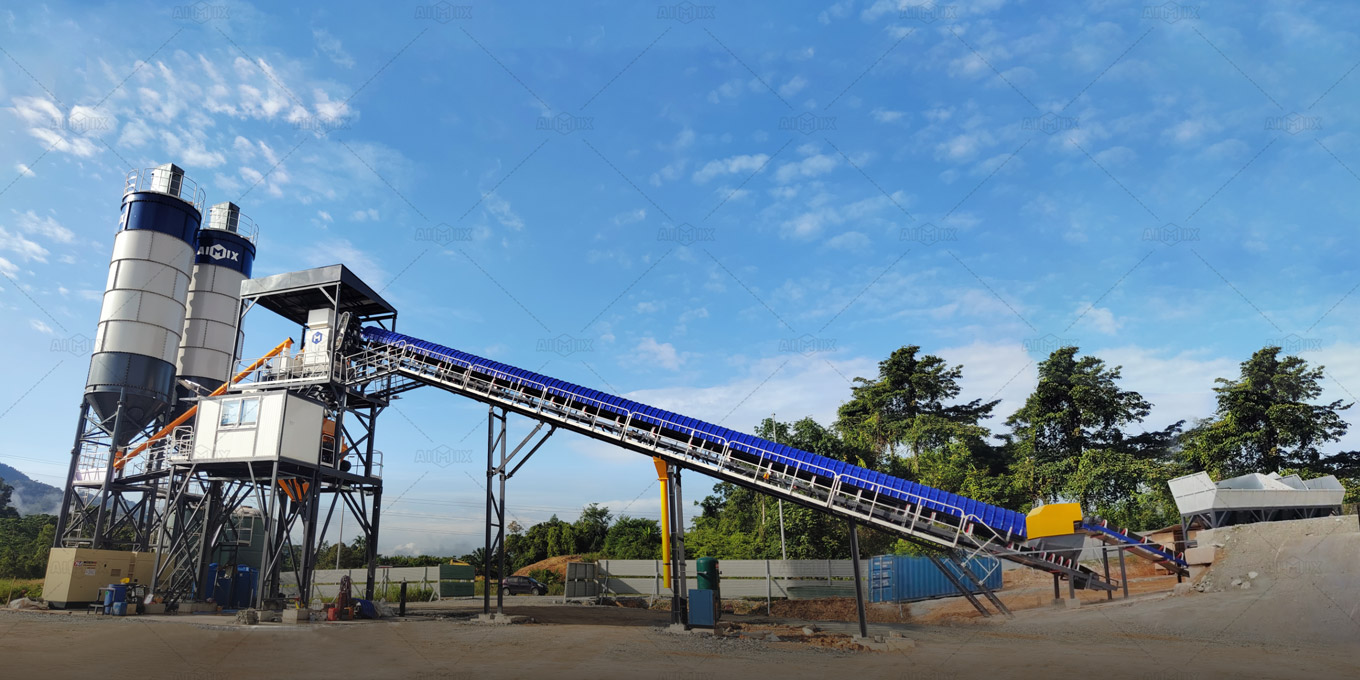
Modern stationary concrete batching plant in Malaysia deployed on Malaysian infrastructure projects typically operate twin-shaft compulsory mixers — a mixer configuration renowned for its homogenization efficiency and short cycle times. Where a conventional drum mixer may require 90 seconds or more to achieve uniform blending, a twin-shaft mixer produces a consistent, thoroughly homogenized batch in 30 to 45 seconds. Multiplied across hundreds of daily production cycles, this cycle time advantage translates directly into meaningful throughput gains.
Aggregate storage configurations on large stationary plants accommodate multiple material classifications simultaneously — typically four to six aggregate bins housing coarse crushed granite, fine aggregate, and specialty materials such as manufactured sand or lightweight aggregates for specific mix designs. Cement storage silos, often arranged in multiples to accommodate Portland cement, ground granulated blast-furnace slag, and fly ash concurrently, enable rapid mix design switching without production interruption. This configurational flexibility is particularly valuable on complex projects requiring multiple concrete grades across different structural elements.
Automation, Data Integration, and Quality Traceability
The contemporary stationary plant is as much a data system as it is a mechanical installation. Supervisory control software logs every batch parameter — aggregate weights, cement quantities, water additions, admixture volumes, mixer cycle duration, and discharge time — creating an immutable production record that supports quality assurance audits and structural warranty documentation. In Malaysia’s increasingly compliance-conscious construction environment, where the Construction Industry Development Board enforces rigorous material certification requirements, this traceability infrastructure is of considerable practical value.
Remote monitoring capabilities extend this oversight further. Plant managers and quality control personnel can review production data in real time from site offices or remote locations, flagging anomalies before they propagate across multiple batches. Automated alarm systems trigger alerts when constituent material weights deviate beyond permissible tolerances, intercepting quality departures at the earliest possible stage. This level of process control was simply unattainable with earlier plant generations and represents a qualitative advancement in concrete production governance.
Strategic Deployment of Stationary Plants on Malaysian Project Sites
Site Integration and Logistical Planning
Positioning a stationary plant effectively within a Malaysian construction site requires careful logistical choreography. Truck mixer routing, aggregate delivery access, cement tanker discharge points, and plant maintenance clearances must be resolved coherently within the site layout to prevent operational bottlenecks. On congested urban sites — common in Kuala Lumpur’s central business district developments — space constraints demand compact plant configurations that preserve truck circulation without compromising production throughput.
Proximity to pour locations minimizes transit time and reduces the risk of slump loss during delivery, particularly critical in Malaysia’s equatorial climate where ambient temperatures routinely exceed 33 degrees Celsius and accelerate cement hydration. Plants positioned optimally within site boundaries can support delivery cycles of under 20 minutes door-to-door, maintaining fresh concrete workability across even the most demanding continuous pour schedules.
Economic Rationale and Project-Level Returns
The capital commitment associated with establishing a dedicated stationary ready mix plant on a project site is substantial. Equipment procurement or lease, civil foundation works, electrical infrastructure, and commissioning represent a significant upfront expenditure that demands rigorous financial justification. For projects below a threshold volume — typically estimated at 50,000 cubic meters over the project duration — the economics of dedicated plant ownership may not close convincingly against procurement from an established commercial ready-mix supplier.
Above that threshold, however, the calculus shifts decisively. The per-cubic-meter cost of self-produced concrete from a stationary plant consistently undercuts commercial ready-mix pricing once fixed costs are amortized across sufficient volume. Supply chain autonomy eliminates the premium volatility associated with commercial supplier capacity constraints during peak demand periods — a real and recurring phenomenon in Malaysia’s construction-dense urban corridors. Schedule certainty, the most difficult value to quantify and the most costly to forfeit, becomes an owned asset rather than a purchased service. For the project developer navigating a tight contractual timeline in Malaysia’s demanding infrastructure environment, that distinction carries consequences measured not in percentage points, but in project outcomes.
Comments
No comments yet. Be the first to react!