Road construction procurement operates in a world where schedule slippage is not an abstraction — it is a contractual liability with a daily cost attached to it. Every element of the material supply chain that feeds a road project carries schedule risk, and aggregate supply is among the most consequential. Delays in crushed gravel delivery cascade through subbase preparation, base course placement, and paving sequences with a speed that project managers find consistently unpleasant. The supply chain that looked adequate during tender preparation has a habit of revealing its vulnerabilities once earthworks are complete and the project is genuinely hungry for material.
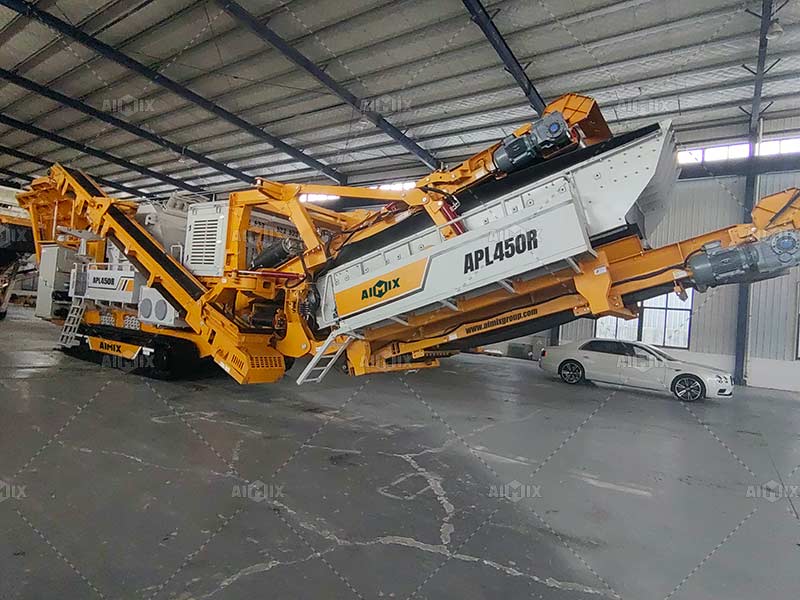
Mobile gravel crushers have emerged as a procurement and operational response to precisely this vulnerability. Rather than positioning aggregate supply as a logistics problem to be managed between a fixed quarry and the project site, mobile crushing brings the production capability to the material source — wherever that source happens to be along the project corridor. The implications for schedule performance, material cost, and procurement flexibility are significant enough to have shifted the equipment strategy of road contractors across multiple markets. Understanding why these machines match tight construction schedules so effectively requires looking at where conventional aggregate supply chains typically break down, and how mobile crushing addresses each failure point directly.

##Where Conventional Aggregate Supply Chains Create Schedule Risk
Haul Distance Sensitivity and the Logistics Compounding Effect
Fixed quarry operations supply aggregate competently when the project site is within economic haul distance. That distance varies by market, fuel cost, and road conditions, but the underlying dynamic is consistent: as haul distance increases, delivered material cost rises, truck cycle times lengthen, and the number of vehicles required to maintain a given delivery rate grows. Beyond a certain threshold — which arrives faster on remote or linear infrastructure projects than procurement teams typically anticipate — the logistics cost of aggregate supply becomes a project budget problem, and the logistics complexity becomes a schedule risk.
The compounding effect is what makes this genuinely dangerous for tight schedules. A road project consuming 500 tonnes of crushed aggregate per day across a 150-kilometer corridor is not simply a material supply problem — it is a rolling logistics coordination challenge that requires a continuous, synchronized flow of vehicles between a fixed supply point and a moving demand point. Any disruption to that flow — vehicle breakdown, road access restriction, weather, or simply the cumulative inefficiency of a long haul cycle — translates directly into material shortfall at the paving front. And material shortfall at the paving front means stopped work, idle crews, and a schedule that is slipping while the procurement team searches for solutions.
Fixed Supply Dependency and the Single-Point-of-Failure Problem
Relying on a single quarry as the aggregate source for a major road project creates a procurement architecture with an uncomfortable characteristic: it has no redundancy. A fixed quarry faces its own operational vulnerabilities — equipment breakdown, blasting permit delays, environmental compliance issues, access road conditions, and production capacity constraints during peak regional demand — any of which can reduce or interrupt supply at exactly the moment the project needs it most.

Contractors who have experienced a primary quarry supply disruption mid-project understand the cost of this dependency acutely. Secondary sources are rarely pre-qualified, pricing for emergency supply invariably reflects the buyer’s distressed position, and the time required to identify, qualify, and mobilize an alternative source frequently measures in weeks rather than days. For a project with contractual completion dates and liquidated damages clauses, those weeks carry a very specific financial consequence. Mobile crusher plant for sale eliminates the single-point-of-failure structure by making the production capability itself mobile — deployable to multiple material sources along the project corridor as conditions and demand require.
How Mobile Crushing Aligns With Road Construction’s Scheduling Rhythm
Production at Source: Eliminating the Haul-Distance Variable
The fundamental schedule advantage of mobile gravel crushing is geographical. By processing raw material at or near its natural occurrence along the project corridor — in borrow pits, river deposits, rock outcrops, or demolition material stockpiles — mobile crushers eliminate the haul-distance variable that makes conventional aggregate supply chains increasingly unreliable as project length increases.
Material travels from crusher to placement zone, not from a distant fixed facility to a point that may be a hundred kilometers away. Truck cycle times shorten dramatically. The number of vehicles required to maintain a given delivery rate decreases correspondingly. And the logistics coordination burden that consumes project management attention on long haul operations reduces to something far more manageable. The direct cost saving on haulage alone frequently justifies the mobile crushing investment on projects beyond a certain scale — but the schedule reliability benefit is often the more operationally significant outcome for contractors whose contracts carry meaningful delay penalties.
Relocation Flexibility Matching the Project’s Moving Demand Front
Road construction is a linear process with a demand front that advances progressively along the project corridor. The aggregate consumption point today is not the aggregate consumption point in three weeks — and a supply strategy that works efficiently for the first phase of a road project may become logistically awkward for the second phase if it cannot reposition accordingly.
Mobile crushers reposition to match the project’s advancing demand front. As earthworks progress and the subbase and base course operations move along the corridor, the aggregate crusher moves with them — maintaining a short haul relationship between production and placement throughout the project duration rather than only during the phases where geography happens to favor a fixed supply point. This relocatability is not a minor operational convenience. It is a structural advantage that keeps materi
Comments
No comments yet. Be the first to react!