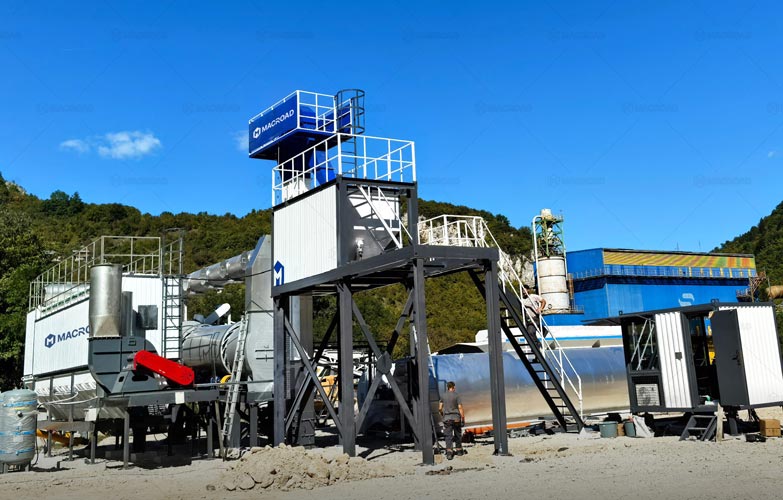
Building and maintaining road and bridge infrastructure across mountainous terrain in Latin America presents demanding logistical challenges. Paving contractors operating throughout the Andes and regional mountain ranges must navigate narrow passes, steep inclines, sharp switchbacks, and strict axle-weight limits. Transporting heavy machinery to these high-elevation zones requires careful route planning and logistics management, as freight expenses can quickly eat into operational margins.
When civil engineering contractors evaluate machinery for high-altitude jobs, focusing solely on the initial asphalt plant price(planta de asfalto precio) without accounting for transit logistics often results in substantial budget overruns. Moving equipment through mountainous corridors demands structural designs that fit standard truck dimensions while meeting local transit permits. For localized repairs or small mountain road contracts, deploying a mini asphalt plant can dramatically simplify logistics, whereas major highway developments require balancing high production capacity against complex freight costs.
Transport Challenges in Mountainous Infrastructure Projects
Transporting construction equipment across mountainous regions in Latin America requires specialized transit planning. Factors such as tight curve radii, unpaved secondary roads, and low-tonnage bridge capacities restrict trailer sizes and payload weights. Furthermore, hairpin turns common in mountain routes make long or wide module transit extremely difficult without expensive specialized escort fleets.
For any road paving firm, shipping efficiency directly influences total project mobilization speed. Oversized loads require special movement permits and escort vehicles, driving up expenses. Choosing an asphalt plant(planta de asfalto) design that matches regional transport conditions is critical to keeping transit costs under control.
Evaluating Containerized, Modular, and Stationary Configurations
Equipment manufacturers design production facilities in three primary structural configurations: containerized, modular, and stationary. Each option interacts differently with mountain transport networks, directly influencing total freight rates.
Containerized Design: Maximum Efficiency for Narrow Mountain Corridors
Containerized structures offer distinct logistical advantages for mountainous logistics. All primary components are built within standard ISO container dimensions, enabling them to travel on standard flatbed trucks without triggering oversized cargo surcharges.
Key advantages of containerized units include:
- Standard shipping dimensions that easily negotiate sharp hairpin turns and narrow bridges.
- Lower freight rates due to standard commercial truck transport.
- Fast unloading and setup using standard mobile cranes.
For small-to-medium mountain paving jobs, a compact containerized mini asphalt plant(mini planta de asfalto) provides outstanding mobility, allowing contractors to shift between multiple sites efficiently while keeping transportation costs low.
Modular Design: High Output Balanced with Manageable Logistics
Modular systems divide the facility into pre-assembled block modules. These components are larger than containerized units but significantly easier to move than traditional stationary installations. Contractors usually transport modular components using standard lowboy trailers.
While freight rates for modular equipment are slightly higher than containerized alternatives due to occasional oversize permits, a modular asphalt plant provides greater output capacity. This design suits medium-to-large highway and bridge access projects where high daily tonnage is necessary.
Stationary Design: High Volume with Demanding Logistics
Stationary facilities are engineered for continuous high-volume production at permanent sites. They feature large steel framing and bulky components requiring heavy-duty multi-axle trailers and heavy cranes.
Moving a stationary plant through mountain passes involves significant expense. Narrow mountain corridors, weak bridges, and tight curves often block heavy haulers entirely. Consequently, freight rates for stationary machinery in mountain zones are high, making them unfeasible for temporary mountain paving contracts.
Evaluating Practical Cost Drivers and Logistics Efficiency
Calculating overall equipment ROI requires assessing total transit expenses alongside production needs. While large stationary facilities offer lower per-ton production costs, the expense of transporting oversized modules into high-altitude zones can negate those savings. Factoring in transit fees gives a realistic view of the total asphalt plant price delivered to the site.
For localized bridge approaches and mountain road maintenance, choosing a mini asphalt plant reduces logistics overhead. These compact setups require fewer trucks, consume less fuel in transit, and eliminate costly oversize permits.
Key Selection Criteria for Latin American Contractors
Before purchasing machinery for mountain projects, contractors should evaluate several practical factors:
- Route Geometry and Bridge Capacities: Assess curve radii and load limits along the planned transit path.
- Project Scope and Duration: Short-term paving jobs favor containerized units, whereas long-term highway corridors justify modular setups.
- Local Permit and Escort Fees: Calculate regional transport regulation costs for oversized loads.
- Site Assembly Logistics: Verify crane availability at high-altitude job sites.
Strategic Logistics Planning for Mountain Construction
Selecting the optimal equipment layout for mountain transit in Latin America depends on balancing freight costs, site accessibility, and required production capacity. Containerized structures consistently achieve the lowest freight rates thanks to their standard dimensions and compatibility with standard flatbed trucks. Whether selecting a mini asphalt plant for flexible short-term jobs or a high-capacity modular asphalt plant for major highway developments, evaluating transit logistics early protects profit margins and ensures seamless project execution.

Comments
No comments yet. Be the first to react!