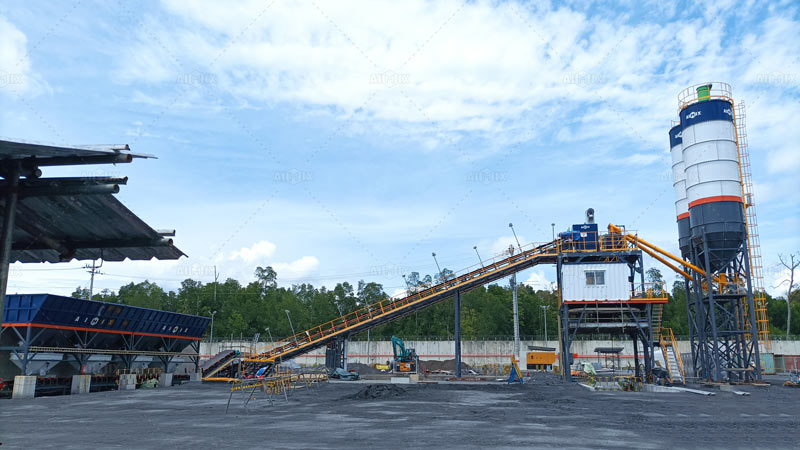
When a construction firm sources heavy equipment for international projects, the base price quoted by the manufacturer is often just the starting point. Nowhere is this more evident than in South America, where two neighboring countries can present wildly different final costs for identical machinery. Understanding why the same concrete plant shipped to São Paulo, Brazil, arrives at a different landed price than one sent to Lima, Peru, is essential for contractors looking to protect their profit margins.
The discrepancy isn't arbitrary—it's the result of a complex web of logistics, taxation, local regulations, and market dynamics. For any construction professional evaluating a ready mix concrete plant investment, grasping these variables can mean the difference between a project that comes in under budget and one that bleeds capital before the first cubic meter is poured.
The Core Components of Landed Cost
Before diving into country-specific differences, it's important to understand what constitutes "landed price." This goes far beyond the initial concrete plant price(planta de concreto precio) quoted by the manufacturer.
Base Equipment Pricing
The ex-factory cost of the machinery itself typically accounts for 60-70% of the final landed price. This includes the mixer, conveyors, cement silos, control systems, and structural components. However, even this base figure can be negotiable depending on the manufacturer's market penetration strategy in each country.
The Logistics Multiplier
Shipping heavy equipment to South America involves ocean freight, insurance, port handling, and inland transportation. While the sea distance to Santos (São Paulo's port) and Callao (Lima's port) is similar from most manufacturing hubs like China or Europe, the inland logistics differ dramatically. Brazil's vast size means equipment destined for São Paulo might travel relatively short distances from the port, but infrastructure bottlenecks can create delays. Peru's challenging terrain—moving equipment from Callao up to Andean project sites—adds complexity that insurers factor into premiums.
Brazil's Unique Tax Architecture
Brazil is infamous for its intricate tax system, and construction equipment imports bear the full weight of this complexity.
The Tax Cascade
When a concrete plant(planta de concreto) enters Brazil, it faces multiple layered taxes:
- Import Duty (II): Generally ranges from 14-20% for capital goods
- IPI (Tax on Industrialized Products): Adds another 10-15%
- ICMS (State VAT): Varies by state but typically 12-18%
- PIS/COFINS (Social Contribution Taxes): Combined around 9.25%
What makes Brazil particularly challenging is that these taxes often compound—calculated not just on the import value but on top of each other. A $100,000 ready mix concrete plant can easily accumulate $50,000 or more in taxes before it clears customs.
The Compliance Burden
Beyond tax rates, the administrative cost of compliance in Brazil is substantial. Import licenses, registration with federal and state authorities, and the need for local legal representation add thousands of dollars in indirect costs that don't exist in simpler markets.
Peru's More Streamlined Approach
Peru has positioned itself as one of South America's more business-friendly import destinations, and this reflects in equipment landed costs.
Simpler Tax Structure
Peru's import regime is more straightforward:
- Ad Valorem Duty: Typically 0-11% depending on the equipment classification
- IGV (General Sales Tax): A flat 18% that functions similarly to VAT
- Selective Consumption Tax: Rarely applies to construction machinery
For that same $100,000 concrete plant, total taxes upon entry to Peru might fall in the $15,000-20,000 range—significantly lower than Brazil's burden.
Free Trade Agreements
Peru has pursued aggressive trade liberalization, including agreements with major manufacturing economies like China and the United States. A concrete plant manufactured in China, for instance, may enter Peru with reduced duties under the China-Peru FTA, while Brazil lacks such comprehensive agreements with certain suppliers.
Market Structure and Competitive Dynamics
The differences don't stop at the border. Once equipment clears customs, local market conditions shape the final price contractors pay.
Brazil's Domestic Manufacturing Muscle
Brazil possesses a robust domestic construction equipment industry. While this might seem like it would lower prices through competition, it often creates a protected market. High import barriers exist partly to shield local manufacturers like Votorantim and other regional players. This reduces the competitive pressure that might otherwise drive down prices.
For contractors evaluating a ready mix concrete plant(planta de concreto premezclado) purchase, the choice in Brazil is often between expensive locally-built units and even more expensive imported ones after taxes. This dynamic keeps baseline pricing elevated across all segments.
Peru's Import-Dependent Market
Peru has minimal domestic manufacturing capacity for heavy construction equipment. The market has evolved to depend almost entirely on imports, creating a more transparent and competitive environment among international suppliers. Distributors in Lima know they must compete on price and service, not protectionism.
This means that while a concrete plant might have a similar base price from the manufacturer, the final cost to the Peruvian buyer often includes thinner margins and fewer hidden markups compared to the Brazilian buyer.
Operational and Installation Considerations
The landed price discussion doesn't end when the equipment arrives on site. Installation and commissioning costs vary significantly between these markets.
Labor and Technical Expertise
Brazil's more developed industrial base means skilled technicians for erecting a ready mix concrete plant are readily available—but they command higher wages. A crew of Brazilian specialists might install equipment faster but at daily rates that exceed those in Peru.
In Peru, specialized technicians may need to be brought in from abroad or trained specifically for complex installations, potentially extending timelines and introducing travel and per diem costs. However, general labor for foundation work and site preparation is often more affordable.
Infrastructure and Site Preparation
São Paulo state benefits from reliable power grids and well-developed industrial zones. Connecting a new concrete plant to utilities is usually straightforward. In parts of Peru, particularly for projects outside Lima, contractors may need to invest in generators, water storage, and other infrastructure that Brazilian buyers take for granted. These "soft costs" must be factored into the total investment calculation.
Financing and Currency Considerations
How buyers pay for equipment also influences the effective price.
Currency Volatility
Brazil's real has historically experienced significant swings against the dollar and euro. Importers often need to hedge currency risk or accept that the local currency cost of a dollar-denominated concrete plant can shift dramatically between order and delivery. This uncertainty adds cost, either through financial instruments or buffer pricing from local distributors.
Peru's economy is more dollarized, with many domestic transactions conducted in US currency. For Peruvian contractors, the path from dollar quote to final payment involves less friction and fewer currency-related surprises.
Financing Availability
Brazil's development bank BNDES has historically offered favorable financing for capital equipment purchases, though availability fluctuates with government policy. When accessible, subsidized credit can offset higher upfront costs, effectively lowering the total cost of ownership even if the landed price is higher.
Peruvian buyers more often rely on commercial bank financing or supplier credit, with terms that reflect standard market rates rather than developmental subsidies.
Making Strategic Sourcing Decisions
For construction firms operating across South America, these regional price differences shouldn't just be accepted—they should be managed strategically.
Some companies find value in centralizing equipment purchases through Peruvian or other neighboring country entities with favorable import regimes, then managing cross-border movement carefully to avoid triggering additional duties. Others negotiate regional pricing with global suppliers, asking for unified delivered pricing that smooths out the discrepancies between São Paulo and Lima.
The key is recognizing that concrete plant price lists from manufacturers are just the starting point for negotiation, not the final word. By understanding the specific cost drivers in each market, buyers can structure purchases to minimize total expenditure—whether that means bundling multiple plants into a single shipment, choosing different points of entry, or adjusting plant configurations to qualify for different tariff classifications.
The reality of construction equipment sourcing in South America is that identical machinery will carry different price tags in different countries. For the contractor willing to dig into the details of logistics, taxation, and local market conditions, these differences aren't just obstacles—they're opportunities to optimize investment and gain competitive advantage. Whether you're placing a ready mix concrete plant in São Paulo's industrial outskirts or Lima's developing suburbs, the smart money starts with understanding exactly what drives the final number on the invoice.

Comments
No comments yet. Be the first to react!