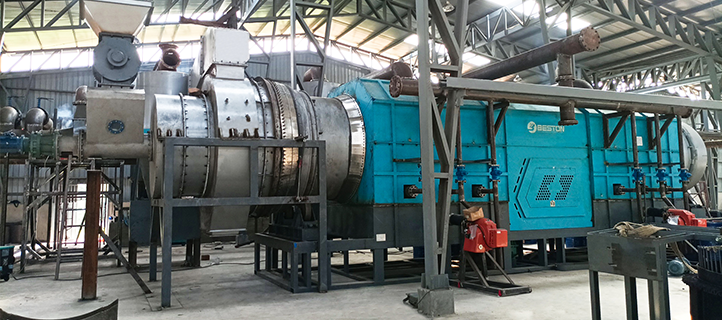
The hydrogen-to-carbon (H/C) ratio is a critical determinant of biochar stability, energy content, and suitability for soil amendment or carbon sequestration. Lower H/C ratios indicate a more condensed aromatic structure, providing higher thermal stability and slower biodegradation rates. Maintaining an optimal H/C ratio during coconut shell biochar production ensures both product durability and compliance with carbon credit protocols.
Coconut shells, with their high lignocellulosic content, offer a robust feedstock for producing biochar with low H/C ratios, provided that pyrolysis conditions are carefully controlled.
Feedstock Quality Control
Moisture Content and Preprocessing
Moisture content in coconut shells directly affects devolatilization and the final H/C ratio. Pre-drying to below 10% moisture improves heat transfer and reduces the formation of oxygenated volatile compounds, which can increase hydrogen content in the solid residue.
Shredding coconut shells to uniform particle sizes ensures even heating within the coconut shell charcoal making machine, preventing hotspots that can produce char with inconsistent H/C ratios.
Purity and Contaminant Removal
Impurities such as residual husk fibers, sand, or other organic residues can influence gas-phase reactions and affect the aromatic condensation process. Screening and washing feedstock prior to pyrolysis ensures a uniform composition, promoting predictable hydrogen loss and carbon stabilization.

Pyrolysis Parameter Optimization
Temperature Profiling
High-temperature pyrolysis is essential for lowering the H/C ratio in coconut shell biochar. Temperatures in the range of 500–700°C favor aromatic ring formation and extensive dehydrogenation. Controlled heating ramps prevent excessive volatilization that could compromise char yield.
Maintaining precise temperature control in a charcoal machine ensures uniform carbonization, enhancing aromaticity and reducing residual hydrogen.
Residence Time
Optimal residence time is crucial for allowing complete thermal decomposition of labile hydrogen-bearing compounds. Short residence times may result in biochar with higher H/C ratios, while excessive residence can over-crack the carbon matrix, reducing char yield without further lowering H/C significantly. Fine-tuning residence time ensures maximum carbon condensation efficiency.
Reactor Atmosphere
Limiting oxygen ingress is critical. Even minor oxygen presence promotes partial combustion and formation of unstable carbon structures. An inert or controlled atmosphere within the pyrolysis plant favors dehydrogenation reactions while preserving the integrity of aromatic networks.
Process Enhancements
Gas Recirculation
Recirculating pyrolysis gas can improve heat distribution and promote secondary cracking of hydrogen-rich volatiles, further lowering the H/C ratio. Gas recycling also enables the recovery of energy, which can be redirected to preheat feedstock, enhancing process efficiency.
Catalytic Assistance
Introducing catalysts such as transition metal oxides in the pyrolysis plant can accelerate hydrogen abstraction and aromatic condensation. Catalytic pyrolysis promotes lower H/C ratios at relatively reduced temperatures, optimizing both energy use and char quality.
Controlled Cooling
Post-pyrolysis cooling rates impact biochar microstructure. Rapid quenching may trap hydrogen in unstable sites, increasing H/C, while controlled cooling allows stabilization of aromatic clusters. Implementing staged cooling zones ensures consistent H/C outcomes.
Analytical Monitoring
Elemental Analysis
Regular measurement of carbon, hydrogen, and oxygen content is essential. Elemental analyzers allow for real-time adjustments in process parameters, ensuring that biochar consistently meets target H/C thresholds for long-term stability.
Surface Chemistry Assessment
Techniques such as FTIR and XPS help evaluate residual hydrogen-containing functional groups. Monitoring surface chemistry informs adjustments in temperature profiles or residence times to optimize aromaticity.
Structural Characterization
Raman spectroscopy provides insight into the degree of graphitization and aromatic condensation. Higher graphitic ordering correlates with lower H/C ratios and increased biochar durability.
Implications for Biochar Applications
Soil Amendment
Biochar with optimized H/C ratios exhibits high thermal stability and long-term carbon sequestration potential in soils. Lower H/C biochar also improves nutrient retention and microbial habitat stability, enhancing agricultural benefits.
Carbon Credit Verification
Projects relying on carbon credits require biochar with verified low H/C ratios to ensure permanence of sequestered carbon. Maintaining strict control of pyrolysis conditions within the pyrolysis plant facilitates compliance with international carbon standards such as Puro.earth or ISCC.
Energy Recovery
Hydrogen-rich pyrolysis volatiles can be captured and utilized as syngas or fuel, improving overall process economics. Optimizing H/C in the solid residue does not preclude energy recovery; proper gas handling strategies allow both high-quality biochar and efficient energy utilization.
Operational Considerations
Continuous Monitoring
Integrating continuous sensors for temperature, gas composition, and feedstock moisture in the pyrolysis plant enhances consistency of H/C ratios across production batches. Automated feedback loops ensure immediate corrections, preventing quality deviations.
Maintenance and Reactor Integrity
Regular inspection of reactor internals ensures uniform heat distribution and prevents cold zones that could produce high H/C char. Reactor lining materials must withstand high temperatures and resist corrosion from pyrolysis volatiles.
Scaling Strategies
Pilot-scale optimization provides critical data for commercial-scale operations. Maintaining the H/C ratio during scale-up requires careful attention to heat transfer dynamics, gas flow distribution, and residence time adjustments.
Strategic Advantages
Producing coconut shell biochar with reliably low H/C ratios positions pyrolysis projects for both high-value agricultural applications and robust carbon credit generation. By controlling feedstock quality, optimizing reactor parameters, and employing process enhancements, a pyrolysis plant can consistently achieve biochar with superior stability and commercial viability.
This integrated approach ensures that coconut shell biochar serves as a sustainable, high-performance product while maximizing both environmental and economic returns from pyrolysis operations.

Comments
No comments yet. Be the first to react!