In the growing discussion around sustainable waste management solutions, the concept of chemical recycling has garnered significant attention. Plastic, being one of the most pervasive pollutants worldwide, has spurred interest in advanced recycling technologies. One such technology is plastic pyrolysis, a thermochemical process that transforms plastic waste into valuable by-products such as fuel oil, gas, and carbon black. This has raised the question: Does plastic pyrolysis qualify as chemical recycling? To answer this, it is essential to understand the fundamental principles behind chemical recycling and how pyrolysis fits into this framework.
Understanding Chemical Recycling
Chemical recycling refers to processes that break down waste plastics into their molecular components, which can then be reassembled into new, usable materials or chemicals. Unlike mechanical recycling, which involves physically reprocessing plastics into new products, chemical recycling involves the chemical alteration of plastic polymers at a molecular level to recover raw materials. This process can include depolymerization, cracking, or other forms of molecular breakdown.
Chemical recycling technologies are designed to address the limitations of traditional recycling methods, which often fail to effectively process mixed, contaminated, or complex plastics. Through chemical recycling, it is possible to recover high-quality monomers, oils, and gases that can serve as feedstocks for new products or energy generation.
Pyrolysis as a Chemical Recycling Process
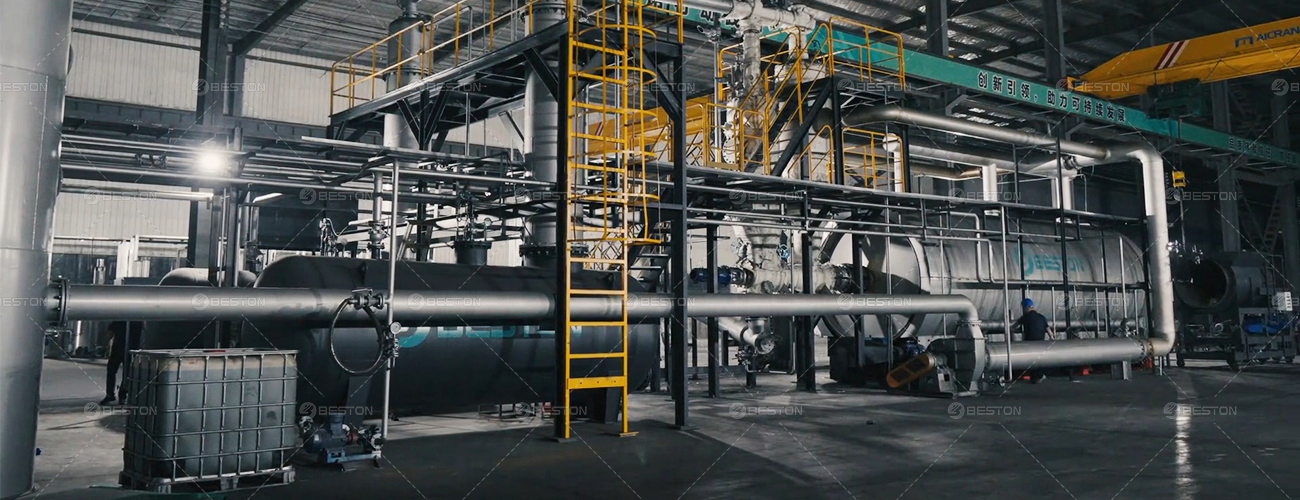
Plastic pyrolysis plant, which involves the thermal decomposition of plastic in the absence of oxygen, is one of the most prominent chemical recycling methods. During this process, plastic waste is heated to temperatures typically between 350-600°C, causing the polymers to break down into smaller molecules. The resulting products are usually liquid (pyrolysis oil), gaseous (syngas), and solid (carbon black).
At its core, pyrolysis is a form of chemical recycling because it decomposes plastics into their basic chemical components through a heat-driven reaction. The plastics are chemically transformed into new substances that can be used for further industrial applications, which is a hallmark of chemical recycling.
Plastic Pyrolysis vs. Mechanical Recycling
Unlike mechanical recycling, which involves grinding, melting, and reforming plastics into new products, plastic pyrolysis offers significant advantages in dealing with more complex and contaminated plastics. Mechanical recycling typically requires high purity, uniformity, and cleanliness in the feedstock, which is difficult to achieve with post-consumer waste plastics. In contrast, pyrolysis is more versatile and can process mixed plastics, including types that cannot be handled by traditional recycling systems, such as polyethylene (PE), polypropylene (PP), polystyrene (PS), and polyvinyl chloride (PVC).
Mechanical recycling involves a series of physical steps—shredding, washing, and extrusion—without altering the chemical structure of the plastics. The final products are often lower in quality, with the material properties deteriorating after multiple cycles. Pyrolysis, on the other hand, offers the potential to regenerate high-quality outputs, including fuel oils that can be used for energy generation, which mechanical recycling cannot achieve.

The Role of Pyrolysis in Chemical Recycling
As part of the broader chemical recycling landscape, plastic pyrolysis system has several key advantages:
-
Diverse Feedstock Handling: Pyrolysis is capable of processing a wide range of plastic waste, including those that are mixed, contaminated, or difficult to recycle by conventional means. This is particularly valuable in the context of growing plastic waste, which often includes a combination of different plastic types, adhesives, and contaminants.
-
Energy Recovery: The oil and gas produced during plastic pyrolysis can serve as valuable alternative fuels, contributing to energy recovery. This differentiates pyrolysis from other forms of chemical recycling, which may focus primarily on recovering monomers or polymers rather than energy products.
-
Reduction of Landfill Use: By converting plastic waste into usable products, pyrolysis reduces the amount of plastic ending up in landfills or incinerators, aligning with global efforts to minimize waste and decrease environmental pollution.
-
Carbon Footprint Reduction: The use of waste plastics as a feedstock in pyrolysis can significantly reduce the carbon footprint associated with the production of virgin plastic materials. Furthermore, pyrolysis oil can be refined into diesel, further contributing to the reduction of fossil fuel dependence.
-
Closed-Loop Potential: In theory, plastic pyrolysis enables a closed-loop system where the by-products of plastic waste are continually cycled back into production, reducing the need for virgin plastic production and minimizing environmental impact.
Technological and Economic Considerations
While plastic pyrolysis fits well within the framework of chemical recycling, there are still challenges to its widespread adoption. The technology itself requires significant investment in pyrolysis plant infrastructure, including reactors, condensers, and filtration systems. Moreover, the energy required for the pyrolysis process can be high, although this can be mitigated by using the syngas produced during the process as fuel.
Economically, the profitability of plastic pyrolysis projects depends on several factors. The cost of feedstock (waste plastic), energy consumption, and the market price for the by-products—pyrolysis oil, syngas, and carbon black—are all critical components. Additionally, regulatory frameworks and the need for effective waste collection systems must be considered to ensure a steady supply of plastic waste.
Challenges in the Market
One of the primary challenges for plastic pyrolysis as a mainstream recycling method is the variability in the quality of the feedstock. Plastic waste, often mixed and contaminated, can lead to inconsistent pyrolysis outputs, which may affect product quality and marketability. Furthermore, the regulatory landscape for chemical recycling varies across regions, with some areas lacking clear guidelines or incentives for this form of waste processing.
Conclusion
Plastic pyrolysis undoubtedly qualifies as a form of chemical recycling, as it involves the chemical breakdown of plastic polymers into valuable by-products that can be reused in various industrial applications. The ability of pyrolysis to handle diverse and contaminated feedstocks, its energy recovery potential, and its contribution to waste reduction position it as a key technology in the effort to address global plastic pollution.
However, the technology still faces challenges related to feedstock quality, energy consumption, and economic viability. As research advances and technological improvements continue, pyrolysis may play an increasingly important role in sustainable waste management and the transition to a circular economy for plastics.

Comments
No comments yet. Be the first to react!