The operating cost of a mobile biochar machine is influenced by far more than fuel consumption alone. Feedstock characteristics, transportation distance, energy demand, labor, maintenance, processing efficiency, and biochar yield all affect the economics of mobile carbonization. Because the equipment is designed to move closer to dispersed biomass sources, its cost structure differs from that of a fixed carbonization facility.
A proper assessment should therefore consider the entire operating cycle rather than focusing on a single expense.
Feedstock Type and Preparation
Feedstock is one of the most consequential variables. Agricultural residue, wood chips, forestry waste, bamboo, coconut shell, and other biomass materials have different moisture levels, bulk densities, ash contents, and carbonization characteristics.
Wet biomass generally requires more thermal energy because a portion of the available heat must evaporate water before pyrolytic conversion can proceed efficiently. Conversely, relatively dry feedstock can reduce energy expenditure and improve throughput.
Particle size also matters. Oversized material may require additional crushing or screening, increasing preprocessing costs and potentially creating a throughput bottleneck.
Energy and Fuel Consumption
A mobile biochar machine requires thermal energy to initiate and sustain carbonization. The actual energy requirement depends on feedstock moisture, reactor configuration, operating temperature, insulation quality, and heat-recovery performance.
Some systems can recycle combustible process gas generated during carbonization as a supplementary heat source. This can reduce external fuel consumption once stable operation has been established.
Temperature control is equally important. Excessive heating can increase energy expenditure without necessarily improving biochar quality, whereas insufficient thermal input can result in incomplete carbonization.
Labor Requirements
Labor costs depend on the degree of automation and the operating configuration of the mobile biochar machine. A highly automated system may require fewer operators for feeding, temperature monitoring, discharge, and routine supervision.
However, mobile operation can introduce additional tasks. Equipment relocation, site preparation, feedstock loading, ash handling, and routine inspection may require personnel beyond those needed during stationary operation.
The number of operators should therefore be calculated according to the complete workflow rather than the reactor alone.
Transportation and Mobility
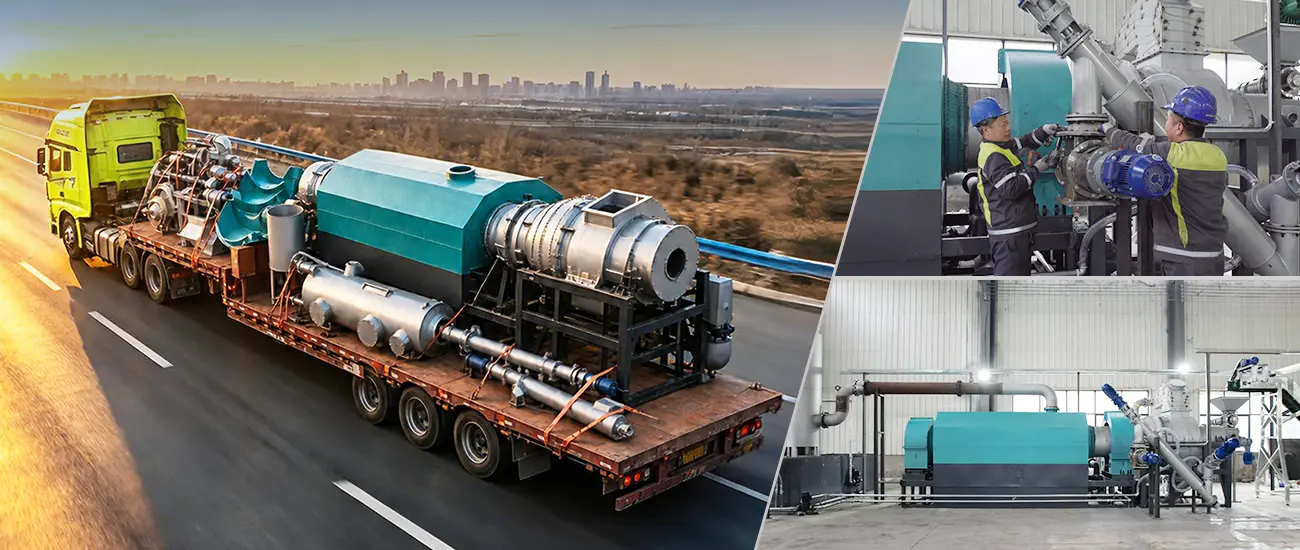
Mobility creates a distinctive cost category. The machine must be transported between biomass sources, and each relocation can involve vehicle costs, setup time, fuel consumption, and site preparation.
The economic advantage becomes more apparent when feedstock is widely distributed. Processing biomass near its source can reduce the need to haul bulky, low-density material over long distances.
In other words, mobility can shift expenditure from feedstock transportation toward equipment transportation. Whether this improves overall economics depends heavily on the geographical distribution and availability of biomass.
Maintenance and Wear
Routine maintenance contributes to long-term operating expenditure. Components exposed to elevated temperatures, abrasive biomass particles, dust, and corrosive gases may experience accelerated wear.
Typical maintenance considerations include reactor inspection, sealing components, conveying mechanisms, burners, fans, temperature sensors, and gas-treatment equipment.
Preventive maintenance is generally more economical than allowing minor mechanical or thermal defects to develop into prolonged downtime. Spare-parts availability and equipment accessibility should also be considered when estimating annual operating costs.
Biochar Yield and Product Quality
The quantity and quality of biochar produced directly affect the economic return of a mobile biochar machine. Biochar yield varies with feedstock composition, operating temperature, residence time, and carbonization conditions.
Higher biochar yield is not automatically preferable. The optimal operating point depends on the intended application and desired material properties. For soil amendment, carbon sequestration, fuel, or industrial applications, different specifications may be appropriate.
Product consistency is therefore an important economic variable.
Overall Operating Cost Assessment
The operating cost of a mobile biochar machine can be summarized through several major categories:
Feedstock preparation
Fuel and electricity consumption
Labor
Transportation and relocation
Maintenance and spare parts
Site preparation
Biochar handling and packaging
Product yield and utilization
The most economical configuration is not necessarily the machine with the lowest initial operating expenditure. A system that achieves stable throughput, efficient heat utilization, reliable mobility, and consistent biochar quality may deliver a lower cost per ton of usable biochar over its service life.
For this reason, operating cost should be evaluated on a full-process basis. The relationship between biomass availability, logistics, energy efficiency, and biochar output ultimately determines whether mobile processing provides a meaningful economic advantage.

Comments
No comments yet. Be the first to react!