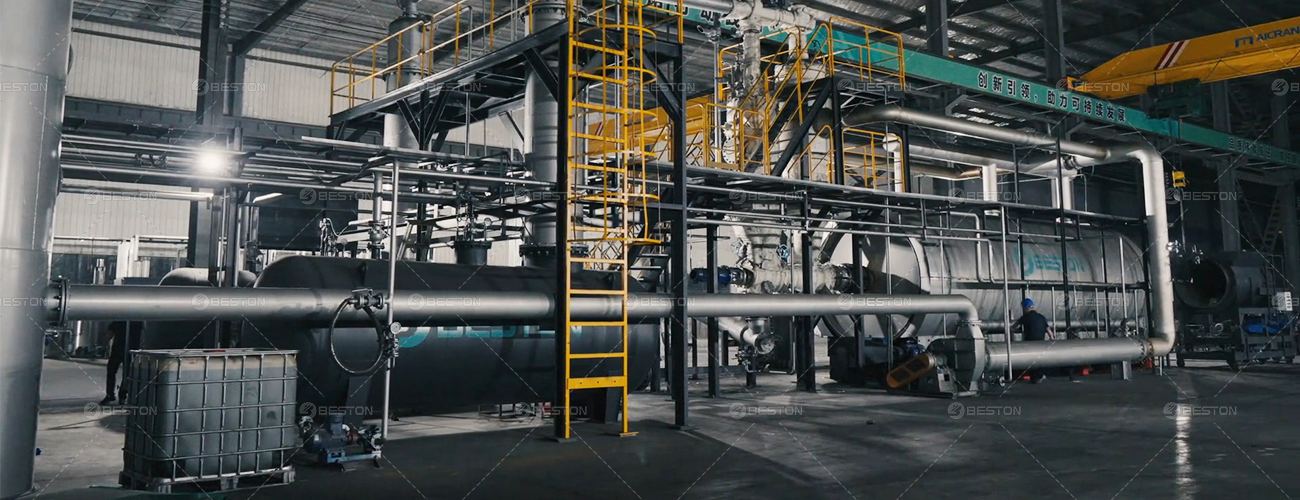
Operational Context of Oil Sludge Management
Oil sludge is an inevitable byproduct of petroleum refining, storage tank cleaning, pipeline maintenance, and oily wastewater treatment. It is a heterogeneous mixture. Hydrocarbons, water, solids, heavy metals, and chemical additives coexist in unstable proportions. This complexity makes oil sludge recovery both technically demanding and strategically important.
Regulatory pressure has intensified. Disposal without recovery is increasingly restricted. As a result, recovery-oriented treatment routes have become the dominant focus, aiming to extract usable hydrocarbons while minimizing secondary pollution and long-term liability.
Mechanical Separation as a Preliminary Route
Centrifugation-Based Recovery
Centrifugation relies on density differentiation under high rotational force. When oil sludge is subjected to centrifugal acceleration, lighter hydrocarbons separate from water and solids. This method is widely used as a front-end treatment due to its relative simplicity.
The advantage of centrifugation lies in speed and modularity. Units can be deployed rapidly and integrated into existing tank-cleaning or wastewater systems. Energy consumption is moderate. Chemical input is minimal.
However, recovery efficiency is constrained. Stable emulsions, fine solids, and high-viscosity sludge significantly reduce separation performance. Residual oil content in the solid phase often remains high, limiting downstream disposal options. Centrifugation alone rarely achieves regulatory thresholds for final waste treatment.
Applicability Boundaries
Centrifugation is best suited for sludge with high free oil content and low solid fineness. It performs poorly when faced with aged sludge, weathered hydrocarbons, or polymer-stabilized emulsions. As a standalone solution, its scope is inherently limited.
Thermal Desorption as a Separation-Driven Process
Process Mechanism and Temperature Regimes
Thermal desorption unit separates hydrocarbons from solids through controlled heating. Volatile and semi-volatile hydrocarbons are vaporized, captured, and condensed, while the remaining solids are discharged with reduced oil content.
Operating temperatures typically range between 300°C and 550°C. Oxygen presence is restricted but not fully eliminated, distinguishing thermal desorption from more reductive thermal routes.
The method offers predictable separation efficiency. Oil recovery rates are high. Solid residues often meet disposal or reuse criteria, depending on feedstock composition.
System Strengths and Constraints
Thermal desorption demonstrates strong adaptability across sludge types. Emulsified oil, weathered hydrocarbons, and fine solids can all be treated effectively. Process control is relatively straightforward, and industrial-scale deployment is well established.
The trade-off is energy intensity. Fuel consumption is significant, particularly for high-moisture sludge. Off-gas treatment systems are mandatory, adding to capital and operational complexity. Hydrocarbon products recovered are often downgraded, requiring further refinement before reuse.
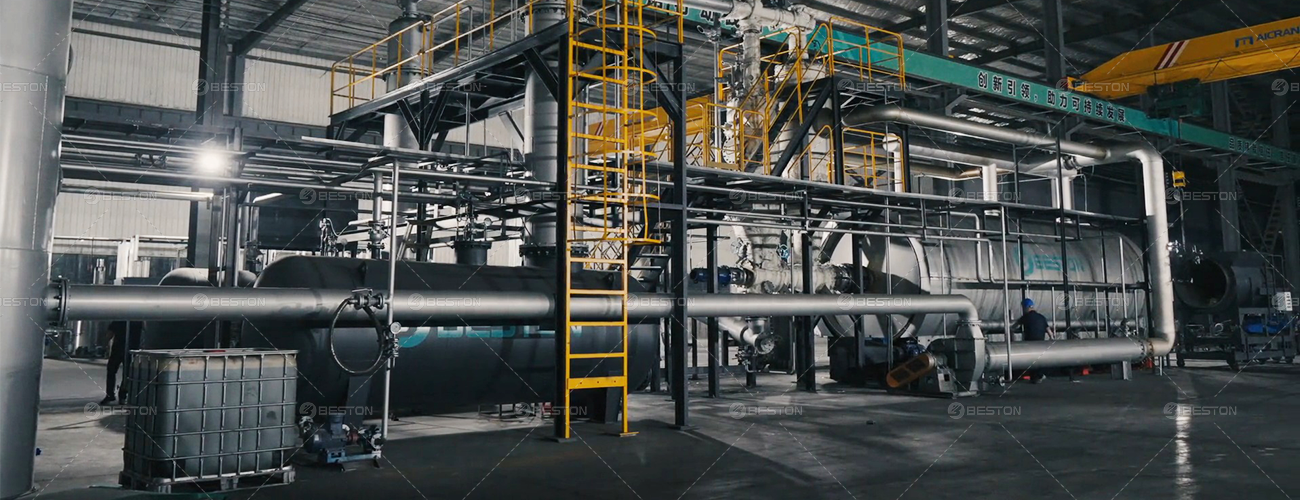
Pyrolysis as a Conversion-Oriented Pathway
Fundamental Process Characteristics
Pyrolysis system treats oil sludge under oxygen-deficient conditions at elevated temperatures, typically between 400°C and 700°C. Instead of merely separating hydrocarbons, it thermochemically converts complex organic compounds into pyrolysis oil, combustible gas, and solid carbonaceous residue.
This distinction is critical. Pyrolysis is not a separation process. It is a transformation process.
Recovered oil fractions often differ chemically from the original hydrocarbons. Aromatic content increases. Molecular weight distribution shifts. Gas byproducts can be reused as process fuel, improving energy efficiency.
Environmental and Resource Implications
Pyrolysis offers deeper detoxification. Persistent organic pollutants are cracked. Long-chain hydrocarbons are restructured. Solid residue may exhibit lower leachability than thermally desorbed solids, depending on operating parameters.
The system complexity is higher. Temperature control, residence time, and feedstock consistency directly affect product distribution. Capital expenditure is typically greater than that of thermal desorption or centrifugation.
Comparative Performance Dimensions
Recovery Efficiency
Centrifugation delivers partial recovery, primarily targeting free oil. Thermal desorption achieves high separation efficiency for recoverable hydrocarbons. Pyrolysis achieves high conversion efficiency but does not preserve original oil characteristics.
The definition of “recovery” varies. If the objective is oil reuse in its original form, thermal desorption outperforms pyrolysis. If the objective is energy recovery and waste minimization, pyrolysis gains relevance.
Environmental Control
Centrifugation generates secondary waste streams requiring further treatment. Thermal desorption demands robust off-gas handling. Pyrolysis concentrates emissions control into fewer streams but requires precise system sealing and monitoring.
Each pathway introduces environmental risk if poorly designed. None is inherently benign.
Economic Structure
Centrifugation has the lowest entry cost but limited value extraction. Thermal desorption occupies a middle ground with balanced recovery and cost. Pyrolysis carries higher upfront investment but offers diversified revenue streams through oil, gas, and carbonaceous byproducts.
Operational economics are highly site-specific. Feedstock consistency, energy pricing, and regulatory incentives alter cost-performance rankings significantly.
Strategic Selection Considerations
No single oil sludge recovery method is universally optimal. Centrifugation functions best as a pre-treatment step. Thermal desorption excels in compliance-driven recovery scenarios. Pyrolysis aligns with long-term resource recovery and volume reduction strategies.
The optimal configuration often involves hybridization. Mechanical separation followed by thermal treatment is increasingly common. This layered approach improves overall efficiency while controlling cost escalation.
Oil sludge recovery is no longer a question of disposal. It is a question of pathway alignment. Technical suitability, regulatory acceptance, and economic resilience define success more than any individual technology choice.
Comments
No comments yet. Be the first to react!