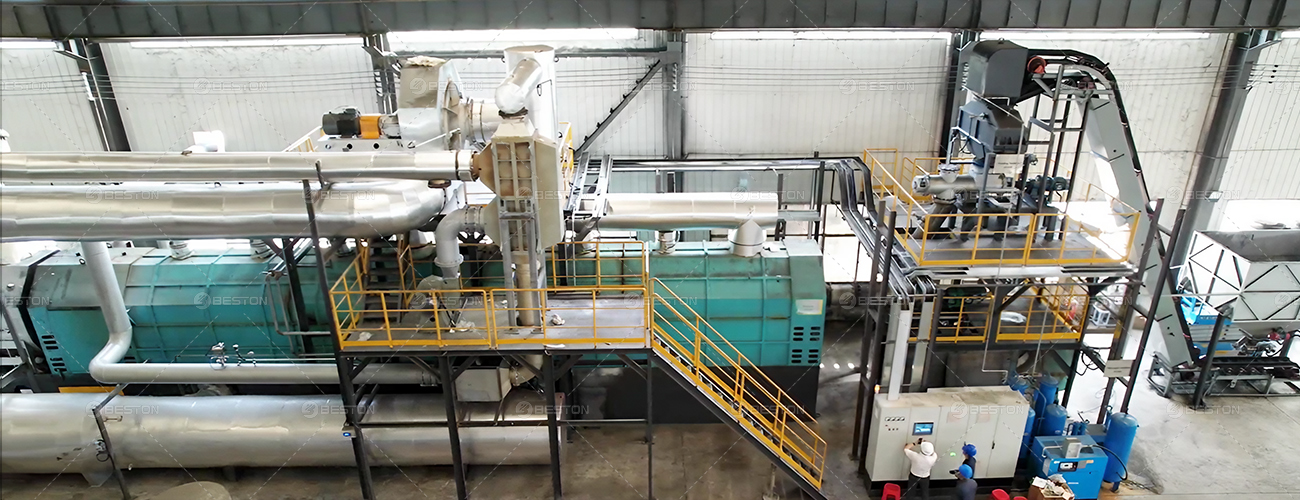
Continuous pyrolysis has gained increasing attention as an industrial solution for converting waste materials and biomass into valuable products such as pyrolysis oil, biochar, syngas, and recovered carbon materials. Compared with batch systems, continuous facilities offer higher throughput, greater automation, and improved production consistency. However, these advantages are accompanied by higher capital requirements and greater operational complexity.
A successful investment depends on evaluating risks across technical, financial, regulatory, and commercial dimensions rather than focusing solely on equipment specifications. Thorough due diligence helps investors identify potential challenges before significant capital is committed.
Assessing Feedstock Supply Risk
Long-Term Availability
Continuous pyrolysis plant requires a stable and uninterrupted supply of feedstock to achieve economic efficiency. Production interruptions caused by insufficient raw material can significantly reduce equipment utilization and increase operating costs.
Investors should evaluate:
- Annual feedstock availability
- Seasonal supply fluctuations
- Supplier reliability
- Transportation logistics
- Future market competition for biomass or waste materials
Securing multiple supply sources can improve operational resilience.
Feedstock Quality Consistency
Variations in moisture content, particle size, contamination, or chemical composition directly affect process stability and product quality.
A comprehensive feedstock assessment should include laboratory testing and long-term sampling to determine whether material characteristics remain consistent throughout the year.

Evaluating Technology Reliability
Commercial Operating Experience
Different to small pyrolysis machine Continuous pyrolysis systems involve sophisticated thermal management, automated feeding, gas handling, and product recovery technologies. Investors should prioritize equipment that has demonstrated reliable performance under commercial operating conditions rather than relying solely on pilot-scale results.
Key evaluation factors include:
- Proven industrial references
- Equipment operating history
- Continuous runtime records
- Maintenance requirements
- Availability of technical support
Technology with verified operational performance generally presents lower investment risk.
Process Stability
Stable reactor temperature, feed rate, and gas flow are essential for continuous production.
Equipment featuring advanced automation and intelligent process control typically delivers more consistent production while reducing operational uncertainty.
Understanding Capital Investment Requirements
Initial Project Cost
Continuous facilities generally require substantially greater capital investment than batch systems due to higher automation levels and more sophisticated auxiliary equipment.
Major investment categories include:
- Process equipment
- Civil construction
- Utility infrastructure
- Environmental protection systems
- Installation and commissioning
- Engineering services
Developing a realistic capital budget helps prevent financing shortfalls during project execution.
Contingency Planning
Unexpected expenses commonly arise during construction.
Allocating contingency funds for unforeseen engineering modifications, regulatory requirements, or material price fluctuations improves financial flexibility.
Analyzing Operating Cost Risk
Energy Consumption
Although many continuous pyrolysis systems recover process gas for internal heating, external fuel and electricity remain significant operating expenses.
Energy cost analysis should consider:
- Local fuel prices
- Electricity tariffs
- Heat recovery efficiency
- Utility reliability
Improving thermal efficiency directly enhances project profitability.
Maintenance Expenditure
Continuous operation places sustained mechanical stress on reactors, conveyors, bearings, and sealing systems.
Preventive maintenance planning and spare parts inventory should be incorporated into long-term financial models rather than treated as occasional expenses.
Evaluating Market Demand
Product Sales Stability
Project economics depend heavily on the ability to sell output products at sustainable prices.
Potential revenue sources may include:
- Pyrolysis oil
- Biochar
- Recovered carbon products
- Syngas utilization
- Recovered steel for tire processing projects
- Carbon credit opportunities where applicable
Diversifying revenue streams reduces dependence on any single product market.
Price Volatility
Market prices for recovered products may fluctuate due to changes in crude oil prices, agricultural demand, environmental policy, or regional supply conditions.
Sensitivity analysis helps investors understand how price changes may affect project profitability.
Regulatory and Environmental Risk
Permitting Requirements
Continuous pyrolysis facilities often require multiple regulatory approvals before construction and operation.
These may include:
- Environmental impact assessment approval
- Air emission permits
- Waste management authorization
- Fire safety approval
- Industrial operating licenses
Project schedules should incorporate sufficient time for regulatory review.
Compliance Costs
Environmental regulations continue to evolve, particularly regarding emissions and waste management.
Investors should anticipate future expenditures related to equipment upgrades, monitoring systems, and reporting requirements.
Construction and Commissioning Risk
Project Execution Challenges
Construction delays may result from:
- Equipment delivery issues
- Contractor coordination problems
- Utility connection delays
- Permit revisions
- Supply chain disruptions
Comprehensive project management reduces schedule uncertainty and minimizes cost overruns.
Performance Verification
Commissioning should verify that the facility achieves its designed processing capacity, product quality, energy efficiency, and environmental performance before commercial operation begins.
Independent performance testing provides valuable assurance for investors.
Operational and Management Risk
Workforce Capability
Continuous pyrolysis facilities require experienced operators capable of maintaining stable process conditions and responding to abnormal situations.
Training programs should emphasize:
- Process control
- Equipment maintenance
- Safety management
- Quality assurance
- Emergency procedures
Skilled personnel contribute significantly to long-term operational reliability.
Digital Monitoring
Modern facilities increasingly utilize automated monitoring platforms to collect production data, identify equipment degradation, and optimize operating parameters.
Data-driven management improves decision-making while reducing unexpected operational disruptions.
Building a Balanced Investment Strategy
Continuous pyrolysis projects offer considerable opportunities for resource recovery, circular economy development, and sustainable industrial growth. However, their long-term success depends on balancing technological capability with commercial viability, regulatory compliance, and operational excellence.
Investors who conduct comprehensive risk assessments across feedstock supply, technology maturity, financial planning, market demand, environmental compliance, and operational management are better positioned to achieve stable returns while minimizing uncertainty. A disciplined evaluation process transforms investment decisions from speculative ventures into strategically managed industrial opportunities.
Comments
No comments yet. Be the first to react!