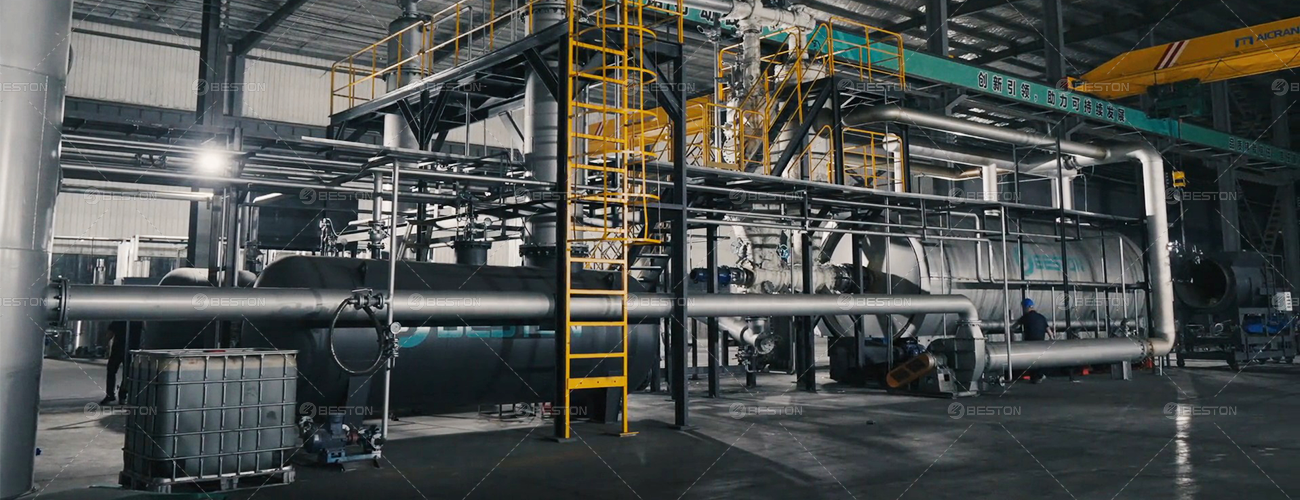
A thermal desorption unit is widely used for the treatment of contaminated soil, oil sludge, drilling waste, and other hydrocarbon-bearing materials. By applying controlled heat to volatilize organic contaminants without combustion, the system enables the recovery of hydrocarbons while reducing hazardous waste volumes. Although the thermal desorption process itself is the technological core of the project, long-term operational success depends equally on well-designed supporting infrastructure.
Infrastructure planning should be integrated into the earliest stages of project development. A properly designed facility improves operational efficiency, enhances safety, simplifies maintenance, and ensures compliance with environmental regulations.
Selecting an Appropriate Project Site
Site selection is the foundation of infrastructure development for thermal desorption unit. The location should accommodate both current operational requirements and future expansion while minimizing transportation and utility costs.
Key site selection factors include:
- Proximity to waste generation sources
- Transportation accessibility
- Land availability
- Ground stability
- Flood risk assessment
- Environmental sensitivity
Projects located close to oilfields, refineries, drilling operations, or industrial waste storage facilities often benefit from lower logistics costs and shorter transportation distances.
Local zoning regulations should also permit industrial waste treatment activities before construction begins.
Designing an Efficient Facility Layout
The arrangement of equipment and supporting infrastructure has a direct influence on production efficiency and workplace safety.
A logical layout generally separates the facility into functional areas such as:
- Feedstock receiving
- Material storage
- Pretreatment operations
- Thermal desorption processing
- Product recovery
- Residue handling
- Utility systems
- Maintenance workshops
Material flow should follow a continuous and streamlined path to minimize unnecessary transportation and reduce operational bottlenecks.
Adequate space should also be reserved for equipment maintenance and emergency access.
Constructing Reliable Civil Foundations
Thermal desorption equipment operates under elevated temperatures and continuous mechanical loading. Stable civil engineering structures are therefore essential.
Foundation design should consider:
- Equipment weight
- Dynamic loading
- Thermal expansion
- Soil bearing capacity
- Vibration control
Reinforced concrete foundations are commonly used for heavy processing equipment. Structural calculations should account for long-term operational conditions rather than installation requirements alone.
Proper foundation construction helps maintain equipment alignment and extends mechanical service life.

Establishing Utility Infrastructure
Reliable utility systems support every aspect of plant operation.
Essential infrastructure typically includes:
Electrical Supply
The electrical system should provide sufficient capacity for:
- Motors
- Control systems
- Instrumentation
- Lighting
- Auxiliary equipment
Backup power solutions may be considered for critical safety systems and process control equipment.
Water Supply
Water may be required for:
- Cooling systems
- Equipment cleaning
- Dust suppression
- Fire protection
Water demand should be evaluated according to process design and local resource availability.
Compressed Air
Many automated valves and control devices rely on compressed air systems for reliable operation.
Stable air pressure contributes to accurate process control and equipment reliability.
Planning Feedstock Storage Facilities
Incoming materials often require temporary storage before processing.
Storage design should account for:
- Daily processing capacity
- Feedstock variability
- Moisture protection
- Containment measures
- Vehicle accessibility
Oil sludge and contaminated materials may require enclosed storage areas with impermeable flooring to prevent secondary environmental contamination.
Proper inventory management also improves production scheduling and operational continuity.
Installing Environmental Protection Systems
Environmental infrastructure is an essential component of any thermal desorption project.
Important environmental facilities include:
- Flue gas treatment systems
- Dust collection equipment
- Wastewater management
- Stormwater drainage
- Odor control measures
Emission treatment systems should be designed according to expected contaminant characteristics and applicable environmental regulations.
Environmental monitoring equipment enables continuous evaluation of plant performance and regulatory compliance.
Developing Safe Product and Residue Handling Areas
Thermal desorption produces treated solids, recovered hydrocarbons, and process residues that require organized handling.
Infrastructure planning should include:
- Product storage tanks
- Residue collection areas
- Loading facilities
- Spill containment systems
Proper segregation prevents cross-contamination and improves operational efficiency.
Clearly defined traffic routes reduce the risk of accidents during material handling activities.
Supporting Automation and Digital Infrastructure
Modern thermal desorption facilities increasingly rely on automated control systems to improve process stability.
Supporting infrastructure may include:
- Industrial communication networks
- Central control rooms
- Process monitoring systems
- Data storage servers
- Remote diagnostic capability
Digital infrastructure enables continuous monitoring of operating conditions, equipment status, and production performance.
Automated data collection also simplifies maintenance planning and regulatory reporting.
Integrating Safety Infrastructure
Safety systems should be incorporated into infrastructure planning rather than added after construction.
Essential safety facilities include:
- Fire protection systems
- Emergency shutdown stations
- Gas detection equipment
- Ventilation systems
- Emergency evacuation routes
- Personal protective equipment stations
Facility design should provide adequate access for emergency response personnel while minimizing potential hazard exposure.
Regular inspection and testing ensure that safety infrastructure remains fully functional throughout the operating lifecycle.
Planning for Maintenance and Future Expansion
Infrastructure should support efficient equipment maintenance while allowing flexibility for future production growth.
Planning considerations include:
- Maintenance access platforms
- Lifting equipment
- Spare parts storage
- Workshop facilities
- Reserved expansion space
Providing sufficient clearance around major equipment simplifies inspection, repair, and component replacement.
Expansion planning reduces future construction disruption if production capacity increases.
Building a Reliable Foundation for Long-Term Operation
Infrastructure development is a critical element of successful thermal desorption projects. While the processing equipment performs the core treatment function, supporting infrastructure determines how efficiently, safely, and sustainably the facility operates over its lifecycle.
A comprehensive infrastructure plan should integrate site selection, civil engineering, utility systems, environmental protection, automation, and safety into a cohesive operational framework. By investing in well-designed infrastructure during the early stages of project development, operators can improve equipment reliability, reduce operating costs, strengthen regulatory compliance, and create a solid foundation for long-term industrial performance.
Comments
No comments yet. Be the first to react!