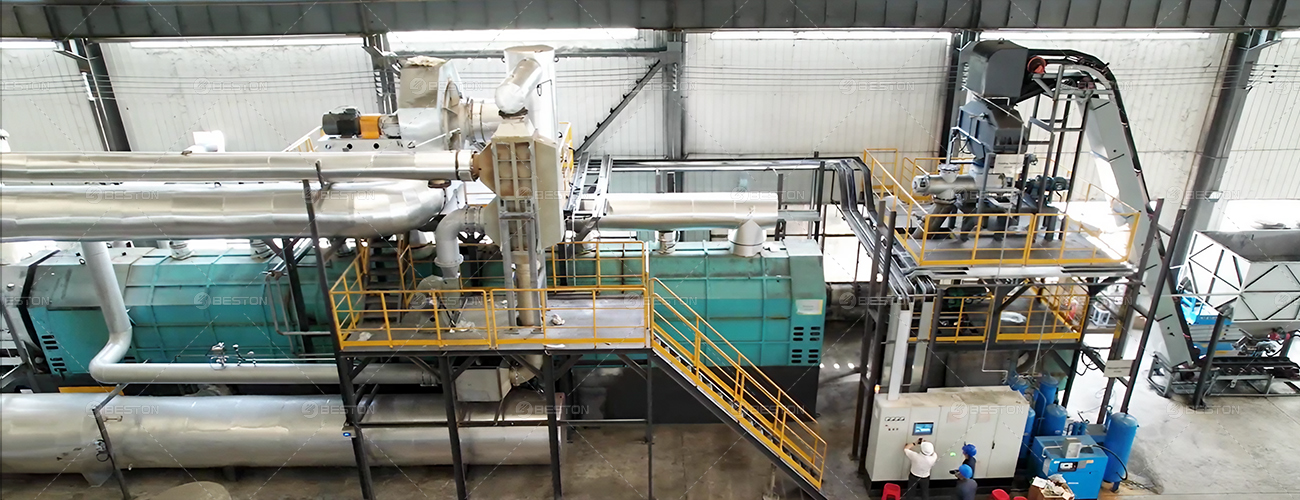
Scrap tire recycling via thermal pyrolysis represents a critical engineering frontier for mitigating global elastomer waste. However, industrial operators frequently encounter operational inefficiencies when processing heterogeneous feedstock streams. Scrap tires are far from uniform; they vary dramatically by vehicle classification, manufacturing origin, structural reinforcement, and chemical compounding. Passenger car tires, commercial truck tires, and specialized off-the-road tires possess distinct morphological and chemical profiles that directly dictate pyrolytic heat transfer rates, volatile matter evolution, and the ultimate yield distribution of pyrolytic oil, recovered carbon black, and steel wire.
Elastomer Blends and Macromolecular Pyrolysis Kinetics
The core of any tire matrix comprises a complex blend of synthetic and natural elastomers, primarily natural rubber, styrene-butadiene rubber, and polybutadiene. Each polymeric constituent exhibits distinct thermal degradation kinetics and volatilization thresholds. Natural rubber undergoes thermal cleavage at lower temperature intervals, yielding high initial volatile fractions, whereas synthetic styrene-butadiene copolymers require elevated thermal plateaus to achieve complete depolymerization.
Consequently, tires with high natural rubber content decompose more rapidly under initial heating in pyrolysis machine, whereas heavy-duty truck tires—which heavily utilize synthetic blends for enhanced tread wear resistance—demand extended residence times and higher peak reactor temperatures to prevent incomplete thermal cracking and residual heavy tar accumulation.

Reinforcement Architecture and Thermal Conduction
Beyond polymer chemistry, the internal physical architecture of a tire exerts a profound influence on reactor thermodynamics. Passenger car tires typically feature high textile cord content and lighter steel belts, whereas heavy commercial vehicle tires incorporate dense, multi-ply steel wire matrices.
Steel Content and Thermal Conductivity Variations
The presence of substantial steel fractions alters the bulk thermal conductivity of the charge. Steel acts as a localized thermal conductor, accelerating heat penetration into the center of the shredded tire matrix. However, an excessive accumulation of unseparated steel wire inside a continuous tyre pyrolysis plant can cause mechanical wear, bridge feeding mechanisms, and interfere with uniform bed temperatures. Furthermore, the metal fraction absorbs thermal energy without undergoing volatilization, shifting the mass balance calculations and requiring careful calibration of the energy inputs supplied to the primary pyrolytic reactor.
Compounding Additives and Mineral Filler Impacts
Tire manufacturing involves intensive chemical compounding, incorporating reinforcing fillers such as commercial carbon black, mineral silica, sulfur vulcanizing agents, and metallic oxides like zinc oxide. These inorganic additions do not vaporize during the thermal degradation phase; instead, they concentrate entirely within the solid residue, fundamentally altering the quality of the recovered carbon black.
High-silica passenger tires yield a solid residue contaminated with amorphous silicon dioxide, which limits its direct reinjection into high-performance rubber compounding without prior acid leaching or chemical beneficiation. Conversely, heavy truck tires with high carbon black loadings produce a more structurally robust solid residue that, with proper mechanical milling and pelletization, achieves high market valorization.
Volatile Fraction Condensation and Liquid Oil Specification
The chemical composition of the input tire type directly dictates the boiling range and heteroatom concentration of the resulting pyrolytic oil. Passenger tires, containing varied plasticizers and synthetic rubber formulations, generate a highly complex liquid condensate rich in aromatic hydrocarbons, sulfur compounds, and nitrogenated molecules. This requires sophisticated multi-stage fractional distillation and catalytic hydrotreatment to remove contaminants before the oil can be co-processed in conventional refineries. Heavy truck tires, dominated by different vulcanization packages, yield distinct boiling curve distributions that necessitate precise dew-point control within the condensation train to prevent pipe fouling and coking.
Tailoring Operational Parameters for Feedstock Variability
The inherent variability among tire typologies necessitates flexible, highly responsive operational parameters within commercial pyrolysis facilities. Operators cannot apply a static temperature profile or uniform residence time to a mixed batch of passenger and truck tires. Optimizing thermal efficiency requires rigorous pre-sorting, mechanical size reduction, and feed-stream homogenization. By categorizing incoming scrap tires by vehicle classification and structural composition, facility managers can fine-tune reactor heating ramps, optimize syngas recovery trains, and maximize the commercial value of both liquid condensates and solid carbonaceous outputs, securing long-term economic resilience in the competitive chemical recycling sector.
Comments
No comments yet. Be the first to react!