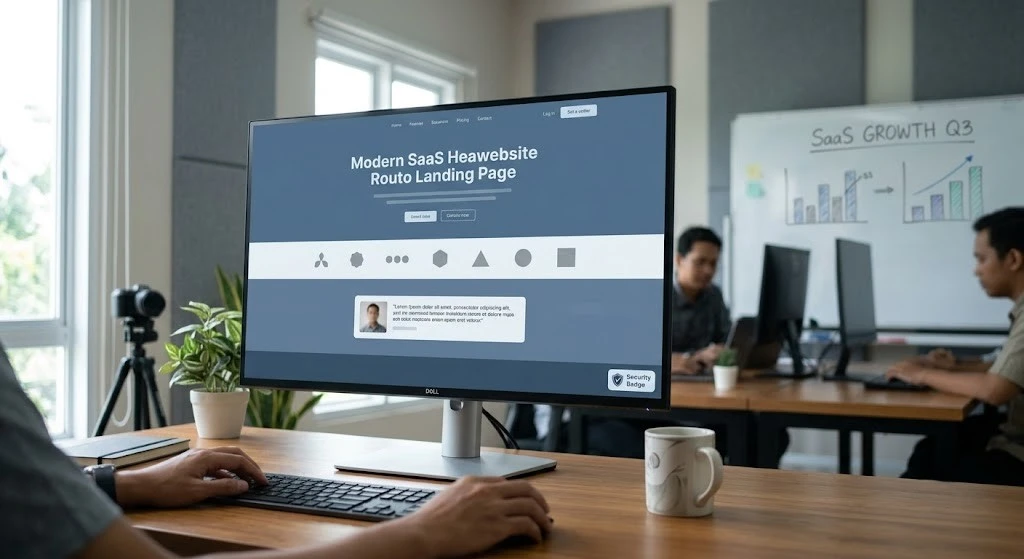
SaaS businesses face a unique selling challenge. Their products are intangible. Buyers cannot see, touch, or test them before purchase. This forces companies to communicate quality entirely through their digital presence. A website that feels unprofessional will cause potential customers to doubt the software itself.
For technology providers, credibility is the currency that matters most. Visitors arrive with numerous concerns. They think about security vulnerabilities, integration headaches, and contracts that become difficult to change. Your website must address these issues head-on. Below are the trust-building components every SaaS and tech site should include.
Communicate Your Value Instantly
The first few seconds on your site are critical. Visitors want to know one thing: “Can this help me?” If your answer is not immediately clear, they will leave. Put your core value statement in the most visible location. Avoid vague language that requires interpretation. Instead of saying you “maximize productivity,” say you “schedule all your social media posts for the week in under 10 minutes.” That is concrete and understandable.
Present Social Proof Effectively
Prospective customers look for validation from their peers. When they see that respected companies use your product, their confidence grows. But you cannot rely on simple logo placements. Develop thorough case studies that detail actual client experiences, challenges, and successes.
If your clients include industry leaders, display their logos. If your clientele is less prominent, invest in detailed testimonials. Always include the person’s complete name, job title, and organization. A quote from “Sam K.” is forgettable. One from “Samir Khan, VP of Engineering at DataForge” is credible. Add quantitative results whenever possible. Did you reduce response times by 40%? Did you increase team capacity by 25%? Measurable outcomes strengthen your case.
Offer Transparent Pricing
Hidden pricing damages trust quickly. Many SaaS companies conceal their prices behind a “Contact Sales” button. They assume this increases lead quality. In reality, it increases frustration. Visitors suspect the pricing is inflated or that they will face high-pressure sales tactics.
Show your pricing structure when you can. Break it into logical tiers with clear descriptions. If your pricing is fully customized, at least provide a typical range. Help visitors understand what they might expect to pay. Honest pricing shows you respect your audience.
Display Security Credentials Prominently
Security is a major concern for software buyers. They are entrusting your platform with sensitive data. They need visible evidence that you protect it properly. Do not bury your security certifications in hard-to-find locations. Place badges in the footer or on a dedicated security page.
Highlight relevant certifications such as SOC 2, GDPR, or HIPAA. Explain your encryption standards. Outline your incident response procedures. Who is informed and how quickly? A clear security posture demonstrates that you take data protection seriously.
Ensure Support Is Easy to Find
Users need help sometimes. When problems occur, they want to know assistance is available. Make your support options highly visible. Place a help center link in your main navigation. Ensure your contact page is not buried.
If you provide live chat, position it where visitors can find it easily. Be honest about whether a human or a bot is responding. Deceiving users by pretending a chatbot is a person will backfire when they realize the truth.
Commit to Visual Quality
Design quality affects perceived product quality. A cluttered or outdated website makes your software look inferior. Every broken link, misaligned graphic, or inconsistent color damages your credibility. If your website appears neglected, visitors will assume your product is neglected too.
A professional web designer understands how to create order and polish. They use whitespace, font selection, and color palettes to establish a clean, trustworthy interface. Consistency across pages is essential. Buttons should share the same style throughout. Text must be legible and consistent. Strong design removes obstacles and lets users focus on your value proposition. For organizations without internal design capabilities, working with a website design company is a worthwhile investment. They can assess your current site, identify shortcomings, and build a design that conveys reliability.
Make Mobile a Priority
Many potential buyers browse software options on smartphones. If your site does not work well on mobile, you lose credibility. A broken mobile experience suggests you overlooked user needs. Test your menus for touch responsiveness. Confirm that text is readable without zooming. Verify that buttons are appropriately sized for tapping. A smooth mobile experience signals attention to detail.
Preview Your Product
Let visitors see what they will get. Use short demonstration videos or GIF animations to illustrate core functions. Avoid stock images of people smiling at laptops. Show the actual dashboard. Let potential customers see how easily they can complete key tasks. When users can preview the product, they feel more comfortable moving forward.
Keep Documentation Open
Technical buyers and developers want to examine your API documentation. Keep it public. Requiring login credentials frustrates technical audiences and suggests lack of confidence. Public documentation shows you are proud of your product and transparent about its capabilities. A thoughtful web designer can format technical pages for clear, easy reading.
Highlight Your Team
Software is created by people. Show them to your audience. Post genuine photos of your founders and team members on your About page. Avoid stock photography. When visitors see real faces, your brand becomes more human. It proves that accountable individuals are behind the product.
Publish Educational Content
Companies that share useful knowledge build authority. When you write clear, practical articles about the challenges you address, you demonstrate expertise. Your blog should feature tutorials, guides, and industry analysis. Do not restrict it to company news. Offering valuable information for free builds trust. When you solve a minor problem for someone at no cost, they are more likely to trust you when they have a larger need.
Closing Thoughts
Trust is cumulative. It builds through many deliberate choices. A clear value proposition, visible pricing, security badges, and cohesive design all work together. They communicate professionalism and dependability.
If you find this challenging, consider bringing in a website design company. They can help identify weaknesses and recommend improvements. Whether you handle it yourself or work with experts, the goal is constant. Remove every reason a visitor might hesitate. In the SaaS industry, trust is the essential gateway to signups. Your website must earn that trust.
Comments
No comments yet. Be the first to react!