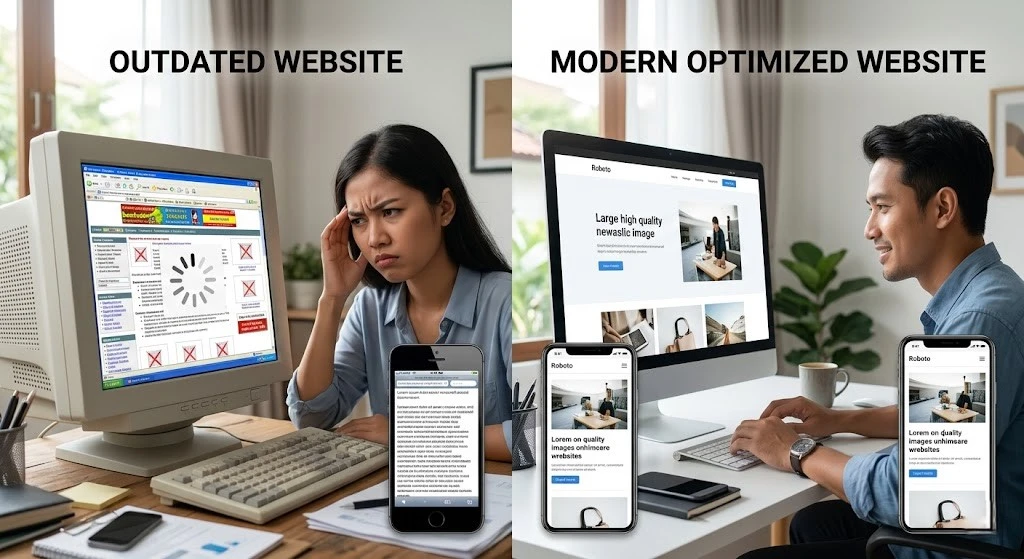
The awareness surfaces slowly. You see competitors launch modern platforms while yours remains unchanged. Customers mention difficulty finding information. That nagging feeling usually means something significant—your website likely needs professional attention.
An aging website doesn’t just exist. It actively damages your reputation. Every problem erodes trust. Mobile visitors leave immediately. Search rankings suffer. These issues grow worse each month.
Having worked with businesses across sectors, I’ve seen the cost of ignoring digital problems. Leaders thought their sites were adequate because they loaded. They missed that online image directly affects sales. Current web standards are now essential, not optional.
Here are five clear warning signs your site has become a problem.
Sign One: Slow Loading Frustrates Users
People expect pages to load in under three seconds. Longer waits create annoyance. Visitors leave quickly. Studies show each extra second reduces conversions by seven percent.
Older sites often have technical problems. Large images slow everything down. Too many redirects waste time. Old servers can’t handle today’s traffic.
When your site loads slowly, visitors think your whole business is slow. They leave before seeing what you offer. Fast sites look professional. Slow sites look neglected. Good content can’t fix bad speed.
A website designer finds these problems quickly. Compressing images helps a lot. Cleaner code reduces load. Better hosting manages traffic well. These are must-haves, not extras.
Sign Two: Mobile Experience Fails
Most browsing happens on phones now. Sites that don’t work on small screens lose huge audiences. Text doesn’t fit. Buttons are too small. Pictures look wrong. Menus break.
Google now ranks sites based on mobile performance first. Poor mobile experience means lower visibility. Competitors with better mobile sites get your traffic.
Check your site on different phones. Does text read clearly? Do images resize properly? Can people scroll up and down easily? Problems here mean lost customers.
Building mobile-friendly from the start costs less. Fixing old sites costs more. A web design agency charges much more for difficult fixes than new builds. Planning ahead saves money later.
Sign Three: Design Looks Old
Web styles change constantly. Colors go in and out of fashion. Layouts evolve. Fonts trend and fade. What looked new years ago now looks dated.
Busy pages overwhelm visitors. Common fonts look lazy. Stock photos feel impersonal. Mixed branding looks unprofessional. People judge your trustworthiness in seconds by appearance.
Ask yourself: does your site look like competitors’ current sites? If not, visitors notice and leave. Plenty of alternatives exist online. Looking current keeps you competitive.
Modern design uses clean space and clear text. Too much animation slows things down. Simple design works because it’s easier to use. A good website designer knows how to update your look effectively.
A web design agency can compare your site to current standards and find what needs updating.
Sign Four: Features Are Breaking
Links stop working over time. Products change. Forms break. Outside tools stop working. Each problem annoys users.
Broken links also hurt search rankings. Google bots waste time on dead links instead of reading your content. Your position drops. Small problems build up until big ones appear.
Forms that don’t send messages lose leads. Shopping carts that crash lose sales. Chat tools that disconnect send customers elsewhere. Every broken piece costs you money.
Regular checks catch problems early. Automated tools scan monthly. People review important paths quarterly. Professional oversight finds issues before customers see them. Managing alone means missing things.
Working with a web design agency sets up systems that keep your site working properly.
Sign Five: Search Traffic Is Falling
SEO rules change often. Google updates hundreds of times per year. Sites that don’t keep up become hard to find.
Technical SEO includes site structure, speed, security, and how easily Google can read your site. Content SEO covers keywords, tags, and content quality. Link SEO builds authority. All three matter equally.
Old sites usually fail at all three. Security is outdated. Mobile problems reduce Google visits. Weak content doesn’t keep visitors interested. Fixing everything works best; small fixes don’t help much.
Less organic traffic shows first. Then paid ads cost more because your pages don’t convert well. Both show the same underlying problem. A full audit by a website designer finds real causes, not just symptoms.
Waiting Costs More
Businesses delay website work because of cost. But waiting makes everything worse. Your audience shrinks. Your reputation suffers. Competitors get ahead.
Fixing things early costs less. Changes go smoother when the base is still solid. Staff learn new systems more easily. Support becomes routine, not emergency-based.
Problems don’t fix themselves. They grow until crisis forces action—after major damage. Preventing problems beats fixing emergencies.
Returns come quickly: more repeat customers, higher sales, fewer support calls. The investment pays off fast.
Your Next Steps
Take an honest look at your site. Test speed, mobile use, links, and visitor data. Note where you are versus where you want to be.
Don’t worry if you find problems. Most fix with targeted work. You don’t always need a complete rebuild. Strategic updates often solve the main issues. Sometimes a new site makes better financial sense.
Talking with a website designer Singapore helps clarify what you need. They prioritize by importance. Your budget sets the timeline. Clear communication prevents problems later.
Good partnerships with a web design agency need openness from both sides. You share your business goals. They suggest solutions that match. Working together creates lasting results.
Your website represents you all day, every day, whether visitors come or not. Make sure it shows your best. Update regularly. Watch performance constantly. Treat your online presence with the same care as your physical location.
Comments
No comments yet. Be the first to react!