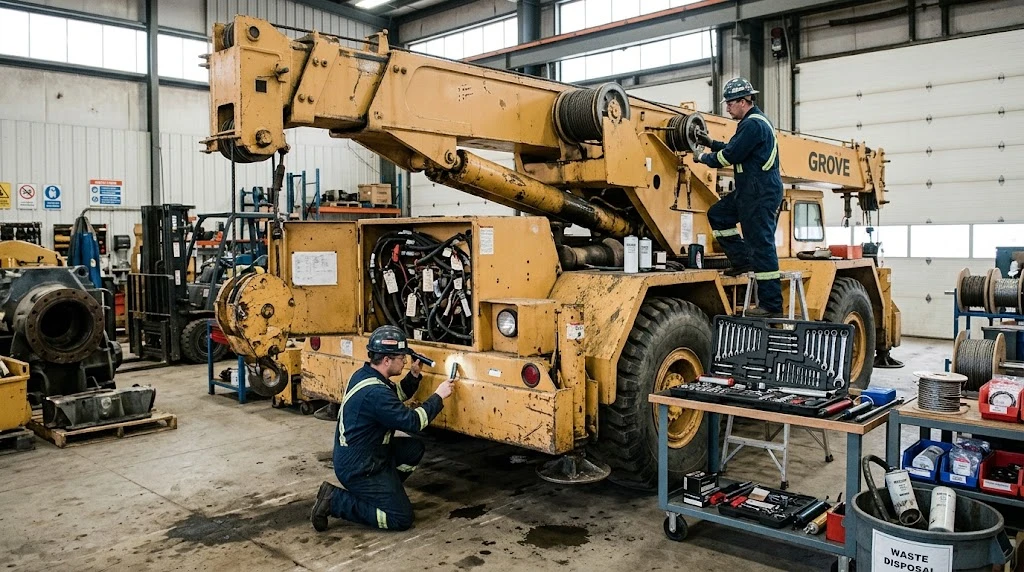
Aging Grove mobile cranes rarely fail all at once. Instead, they wear down gradually. The lift still happens. The machine still runs. Yet recurring faults keep demanding attention. A drip under a cylinder. A lever that no longer feels crisp. Electrical faults that surface under pressure. Eventually, every owner weighs repair against upgrade.
Upgrading a used crane is not about achieving factory condition. It is about strengthening reliability, safety, and operator comfort. Performed well, it can add years of useful service. Performed poorly, it can create new difficulties.
Start With a Genuine Inspection
Before buying any Grove parts, go over the crane methodically. Study boom sections for cracks, corrosion, dents, and pin wear. Inspect the swing circle, brakes, wire rope, sheaves, hook block, and hydraulic hoses. Examine cylinders for scoring and leaks. Review the electrical harness, battery condition, grounds, relays, and switches.
Many older cranes develop puzzling issues that trace back to basic causes. A loose ground can make gauges behave oddly. A corroded connector can block a sensor signal. A clogged filter can make hydraulics feel weak. Locate the root cause first. Note what must be fixed immediately and what can be postponed.
Resolve Safety Problems Before Upgrades
A cracked boom is not an upgrade candidate. It is a required repair. The same applies to failed brakes, worn load pins, damaged swing bearings, or unsafe hook components. Safety-critical defects demand proper attention before money goes toward comfort or performance improvements.
A crane may look clean yet still hide wear. Structural fatigue, cracked welds, and worn bores develop gradually. If a repair seems uncertain, have a qualified person inspect it. Do not depend on paint, grease, or a brief test lift to confirm a machine is sound.
Enhance Controls Without Overcomplicating Them
Control feel matters. Older Grove cranes may use basic levers, early joysticks, or simple electronic controls. Worn valves and tired linkages can make movements vague. Operators may overcorrect, which slows work and adds stress to the machine.
A full modern control system is not always required. Often, better proportional valves, refreshed joystick modules, clean signal wiring, and adjusted linkage can make the crane smoother. The objective is predictable response. If the operator can feather loads without guessing, that is a win.
Restore Hydraulic System Health
Hydraulic problems are common on aging cranes. Leaking cylinders, worn pumps, clogged filters, and hot fluid can reduce performance. Heat is especially harmful. It breaks down seals and fluid, then accelerates wear throughout the system.
Replacing worn cylinders with quality crane parts can restore lifting force. Better hose routing can reduce chafing. Upgraded filtration is a small change that can help pumps, motors, and valves last longer. If the crane uses variable displacement pumps, check pilot lines, solenoids, and control pressure. Weak signals can make a healthy pump feel lazy.
Attend to Rope, Sheaves, and Blocks
Wire rope deserves close attention. Old rope may pass a quick visual check but still have internal wear, crushed strands, or corrosion. If the crane sees heavy use, replacing rope before failure is cheaper than dealing with a dropped load or damaged drum.
Check sheave bearings and grooves. Worn sheaves chew rope. Inspect the hook block, swivel, latch, and bearings. If the block is tired, rebuilding or replacing it may be safer than chasing small defects. Hoist components should move freely and sit true. A little wear in one place can cause bigger damage elsewhere.
Update Safety Systems Where It Helps
Many older cranes have basic overload protection. Newer load moment indicators, anti-two-block devices, angle sensors, and clearer displays can improve operator awareness. This is not about adding gadgets. It is about giving the operator better information during lifts.
Reliable safety devices can help prevent side loading, overtravel, and unstable picks. When installing these systems, use compatible Grove parts or components made for that model. Mixed electronics can create false faults. If a sensor or display does not match the machine’s setup, it may cause more downtime than it prevents.
Don’t Ignore the Electrical Side
Electrical upgrades often get overlooked. If the crane has intermittent lights, gauges, alarms, or control faults, start with the battery, alternator, starter, grounds, and relay panel. Corroded terminals and brittle wires cause a lot of trouble.
Old harnesses can dry out and crack. Connectors can let in moisture. Switch contacts can burn out. Replacing a bad harness section or using sealed connectors can solve repeated issues. If you add new safety devices, wire them properly. Use fused connections, clean routing, and proper strain relief. Random splices can turn a good upgrade into a future headache.
Upgrade the Cab and Operator Interface
Operator comfort is not a luxury on a workhorse crane. A tired operator loses focus. Poor visibility, weak heat or air conditioning, noisy cabins, and bad seats can make a long shift harder than it needs to be.
Simple cab upgrades can help. Better seals, clearer glass, improved HVAC components, updated lighting, and a comfortable seat mount can make daily work easier. LED work lights are a practical change. They draw less power and improve visibility. Just keep the electrical load within reasonable limits.
Care for the Boom and Structure
Grove cranes often have strong designs, but age brings fatigue. If the boom has past repairs, confirm they were done correctly. Welding on high-stress areas needs proper procedures, materials, and inspection. Pin bores, weld toes, bolted joints, and wear plates should be checked on a regular schedule.
Hard-to-reach grease points can be upgraded with remote fittings or automatic lubrication. This is not flashy, but it helps moving parts stay protected. Dry pins and bushings wear faster. Good lubrication can save time and prevent avoidable structural wear.
Choose Grove Parts and Crane Parts Carefully
The market has many suppliers for Grove parts and general crane parts. Prices vary. Fit, finish, and durability vary even more. For critical items, use trusted sources. Ask for material certifications when needed. Verify part numbers against the machine’s serial number and build data.
Older models may have superseded parts. A number from an old manual may not match what the crane actually needs. “Close enough” does not belong on load-bearing components. Measure, compare, and confirm before ordering. If a part affects capacity, strength, or safety, take the time to get it right.
Match Mods to the Machine
Not every upgrade fits every crane. A Grove RT model may need different improvements than an older rough terrain or all-terrain unit. Boom length, capacity, counterweight setup, tires, tracks, and emission package all matter.
Changing a hydraulic pump may require matching flow, pressure, and control signals. Updating electrical components may need calibration or compatible software. If a modification affects rated capacity, get engineering review. Do not guess. A crane is only as good as the weakest linked component.
Keep Records and Test Everything
After upgrades, document the work. Save invoices, part numbers, installation notes, inspection reports, and test results. Good records help the next technician. They also support resale value. Buyers want proof that the machine was maintained, not just patched together.
Testing should not be rushed. Run no-load functions first. Check for leaks, unusual noise, slow response, and overheating. Test safety limits under controlled conditions. If capacity-related parts changed, verify load charts. Then have the operator use the crane normally. Small problems show up fast during real work.
Know When to Stop Upgrading
Older Grove cranes can stay useful for years with the right care. Upgrades should fix weak points, improve reliability, and keep operators safe. Start with inspection. Prioritize structure, hydraulics, and safety systems. Use quality Grove parts and crane parts that fit the machine. Keep records. Test carefully.
At some point, though, the math changes. If repairs keep coming and upgrades barely move the needle, replacement may make more sense. The goal is not to save an old crane for pride. It is to keep it working safely, predictably, and economically.
Comments
No comments yet. Be the first to react!