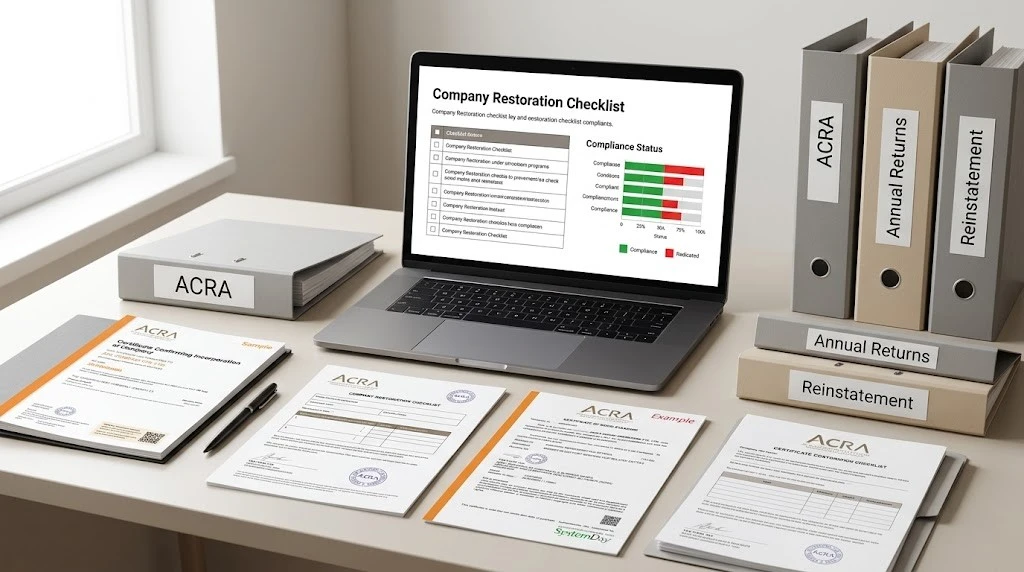
ACRA removes companies from the register when they appear dormant, breach compliance obligations, or fail to file annual returns for two or more consecutive years. Once struck off, a company is no longer a legal entity in Singapore—but restoration is possible, and more directors pursue it than commonly assumed.
The Reality of Being Struck Off
A struck-off company loses its legal existence entirely. Its bank accounts freeze. Its contracts become unenforceable. Its name vanishes from the public register.
Directors and shareholders forfeit all authority to act on the company’s behalf. Any property the entity owned may transfer to the government as bona vacantia—ownerless assets that the state claims by default.
ACRA typically launches the process after compliance deadlines are missed, official notices go unanswered, or no recognised officers occupy the registered address. A formal warning precedes the actual strike-off. Many directors only discover the situation after the fact, often when a bank halts transactions or a contract partner raises an alarm.
The restoration window spans six years from the strike-off date. Beyond that period, reinstatement becomes substantially more difficult and may be unavailable.
Eligible Parties
Former directors, members, creditors, or any party harmed by the removal may petition ACRA. Most requests originate with directors or shareholders who need the company revived to settle outstanding assets, honour active agreements, or resolve pending regulatory issues.
Voluntarily struck-off companies can also seek reinstatement. However, ACRA will not approve restoration until the original grounds for removal are fully addressed.
The Restoration Procedure
All applications proceed through BizFile+, ACRA’s digital filing platform. Several prerequisites must be satisfied beforehand.
Engage a Registered Filing Agent or Qualified Secretary
Since the company no longer exists in the register, individual directors often lack the CorpPass access required to file directly. Most applicants, therefore, turn to a professional company secretary Singapore at this stage. A competent company secretary understands ACRA’s precise requirements, knows which documents are mandatory, and can help applicants avoid the most frequent rejection causes.
Clear Every Outstanding Compliance Issue
ACRA refuses to restore companies that still carry unresolved violations. Overdue annual returns must be submitted. Unpaid penalties require settlement. Disputes with IRAS need resolution. Financial statements must be brought current.
Directors frequently underestimate this requirement. They believe ACRA will overlook past lapses once the application is lodged. It does not.
Assemble Supporting Documentation
The application demands a written justification for reinstatement. It requires proof of the applicant’s standing. It also calls for a declaration outlining the company’s intended future purpose.
Where the removal was involuntary, evidence demonstrating the company remained active at the time substantially strengthens the petition.
Submit and Remit Payment
Administrative restoration costs S$60. Court-ordered restoration costs S$200. ACRA processes routine administrative applications within 14 to 30 working days. Court-ordered restorations, involving formal court summonses and hearings, take considerably longer.
Two Distinct Restoration Pathways
Administrative restoration applies when the strike-off occurred within the past six months. ACRA manages this pathway directly, without court involvement. For applicants who act promptly, this faster route usually suffices.
Court-ordered restoration becomes necessary when more than six months have elapsed, or when ACRA denies an administrative request. The process requires filing an originating summons in the High Court, serving it on the Registrar of Companies, and attending a hearing. The persuasiveness of your presented case carries significant weight. Directors in this situation typically retain a lawyer alongside their company secretary services provider to construct a compelling argument.
The Essential Role of Professional Support Throughout
A company secretary in Singapore is far more than an administrative convenience. The Companies Act mandates that every Singapore-incorporated company maintain a qualified company secretary. During restoration, the company technically has none because it no longer exists. Reappointing a qualified secretary becomes one of the first post-reinstatement obligations.
Before reinstatement, experienced company secretary services manage the groundwork. They identify outstanding filings, liaise with IRAS where necessary, draft the application letter, and manage submission. Directors who proceed independently often encounter rejection on technical grounds—incomplete paperwork, poorly worded statements, or penalties they never knew existed.
Following reinstatement, reliable secretarial services Singapore ensure ongoing compliance. This encompasses annual return management, statutory register maintenance, and AGM deadline tracking. In numerous cases, the compliance breach that triggered removal was entirely avoidable with proper company secretary services established from the outset.
Rebuilding After Reinstatement
Restoration places the company back on the register as if the strike-off never happened. Legal standing returns. Bank accounts can be unfrozen. Contracts regain force. Assets that transferred to the government during the struck-off interval can be reclaimed, though this occasionally requires an additional application.
The immediate imperative after reinstatement involves rapid compliance catch-up. Annual returns, director updates, registered address verifications—these must occur immediately to prevent a repeat scenario.
A methodical transition from your secretarial services Singapore provider, including a proactive compliance calendar, is what makes reinstatement sustainable.
Restoration is genuinely achievable for most struck-off companies. The timeframe is narrow, and the documentation is exacting. Early action, thorough resolution of compliance gaps before filing, and collaboration with qualified company secretary services throughout separate successful petitions from failed ones.
Comments
No comments yet. Be the first to react!