Mountainous terrain presents some of the most challenging conditions for construction and mining operations. Steep slopes, narrow access roads, and remote locations far from established infrastructure demand equipment that can perform reliably under extreme conditions. In the aggregate industry, the ability to produce high-quality materials on-site has become a critical factor in project success. Whether the work involves road construction through the Andes, tunnel excavation in the Himalayas, or infrastructure development in alpine regions, the choice of crushing equipment directly impacts timelines, logistics costs, and overall project feasibility. Tracked crushing solutions have emerged as the preferred option for these demanding environments, offering mobility, durability, and operational flexibility that stationary or wheeled units simply cannot match.
Why Mobility Matters in Mountainous Regions
Mountainous construction sites are defined by their inaccessibility. Narrow winding roads, limited turnaround space, and significant elevation changes make transporting heavy equipment a logistical challenge. Traditional stationary crushing setups require extensive site preparation, foundations, and material handling systems that are often impractical in rugged terrain.
Self-Propelled Solutions for Remote Sites
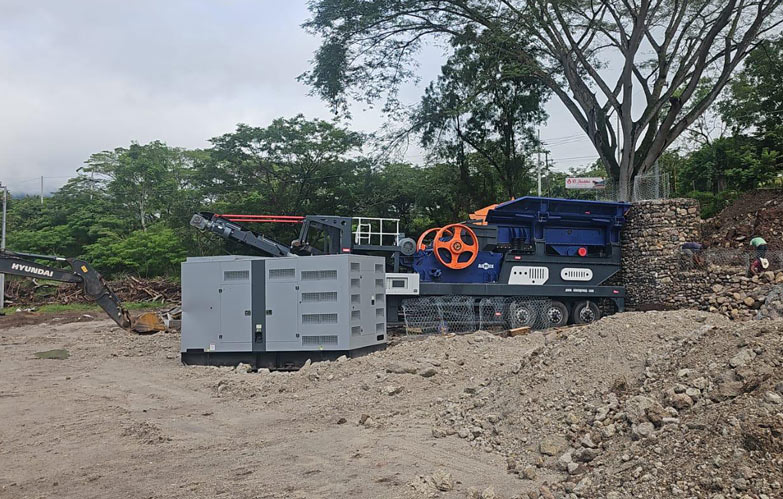
A tracked stone crusher plant(planta trituradora de piedra) eliminates many of these barriers. These self-propelled units can navigate steep grades and maneuver in confined spaces where wheeled carriers would struggle. Once on site, a tracked stone crusher plant can be operational within hours, requiring no concrete foundations or complex setup procedures. This rapid deployment capability is particularly valuable for mountain road projects, where crushing operations may need to relocate multiple times as construction progresses along a corridor.
Contractors working on alpine highways or mountain pass improvements have found that the ability to reposition crushing equipment quickly allows them to match production to project phasing. Rather than hauling aggregate over long distances from a fixed quarry, they can establish crushing operations at multiple points along the alignment, significantly reducing truck traffic on narrow mountain roads and cutting transport costs substantially.
Adapting to Variable Material Types
Mountainous regions present diverse geological conditions. One project site may contain hard granite, while another features river-worn cobbles or fractured sedimentary rock. The ability to process multiple material types with a single equipment configuration is a distinct advantage in these settings.
Processing Natural Aggregates
In many mountainous areas, natural riverbeds and glacial deposits provide abundant sources of rounded aggregate. A pebble crusher(trituradora de piedra de río) configured for tracked mobility allows operators to process these materials directly at the source. Unlike stationary plants that require material to be transported to a central location, a mobile pebble crusher can be positioned alongside the deposit, reducing handling costs and minimizing environmental disturbance.
The design of a pebble crusher must account for the unique characteristics of rounded materials, which require different crushing chamber configurations than angular quarry rock. Tracked units with adjustable crusher settings and advanced automation allow operators to optimize for specific feed materials, ensuring consistent product gradation regardless of material variability.
Recycling Opportunities in Mountain Infrastructure
Mountain road reconstruction projects often generate significant amounts of demolition debris from old pavement, bridges, and retaining structures. A tracked concrete crusher(trituradora de concreto) provides the capability to process this material into reusable aggregate, reducing the need to import virgin materials and lowering project costs. For contractors working in remote mountain regions where aggregate sources may be limited, the ability to deploy a concrete crusher alongside demolition operations creates a self-sufficient material cycle.
A mobile concrete crusher can process reinforced concrete, asphalt rubble, and masonry waste into specification-grade base materials. This capability is particularly valuable on projects where environmental regulations restrict quarry development or where transportation distances make virgin aggregate economically unfeasible.
Operational Advantages in Challenging Environments
Beyond mobility and material versatility, tracked crushing plants offer operational benefits that directly impact productivity in mountain settings.
Reduced Infrastructure Requirements
Stationary crushing operations require significant site development: level pads, retaining walls, material handling systems, and often permanent power connections. A tracked stone crusher plant operates independently of these requirements. The units are self-contained, with integrated conveyors, power units, and control systems. This self-sufficiency allows contractors to establish crushing operations on temporary sites with minimal environmental footprint—a critical consideration in sensitive mountain ecosystems.
Weather Resilience
Mountain weather can be unpredictable, with sudden storms, temperature extremes, and high winds affecting operations. Tracked crushers are engineered for durability in harsh conditions. Heavy-duty undercarriages, weather-protected components, and robust hydraulic systems ensure reliable operation even when weather would shut down less robust equipment. For projects with tight seasonal windows—common in high-altitude regions where winter conditions limit construction—this reliability translates directly to meeting project deadlines.
Economic Considerations for Mountain Projects
The economic case for tracked crushing in mountainous terrain is compelling. While the initial capital investment may be higher than stationary alternatives, the total cost of ownership often favors mobile solutions when logistics are factored in.
Eliminating Haul Costs
In mountain construction, haulage is frequently the largest variable cost. Moving aggregate over steep grades consumes more fuel, requires specialized vehicles, and increases wear on equipment. By positioning a tracked stone crusher plant at or near the point of use, contractors can eliminate or dramatically reduce these haulage expenses. For a typical mountain highway project, the savings in transport alone can offset the premium for tracked equipment within a single construction season.
Fleet Versatility
Contractors who invest in tracked crushing equipment gain the ability to pursue a wider range of projects. The same tracked stone crusher plant that processes quarry rock for a tunnel project can be relocated to process river gravel for a bridge approach or recycle concrete from a demolition site. This versatility improves equipment utilization rates and allows contractors to bid on diverse projects without maintaining separate fleets for different material types.
Strategic Deployment for Mountain Success
Successful mountain construction requires equipment strategies that anticipate the unique demands of high-altitude, rugged terrain environments. Tracked crushing solutions have proven their value across countless projects, from Andean highway expansions to alpine tunnel construction. The combination of mobility, material versatility, and operational durability makes a tracked stone crusher plant an essential asset for contractors working in challenging topography.
For operations that encounter mixed material types, having the capability to deploy a pebble crusher for natural deposits or a concrete crusher for demolition recycling adds layers of operational flexibility that translate directly to project profitability. As infrastructure development continues to push into increasingly remote and challenging terrain, the ability to bring crushing capabilities directly to the job site will remain a defining advantage for contractors who recognize that in mountain construction, mobility is not merely convenient—it is essential.

Comments
No comments yet. Be the first to react!