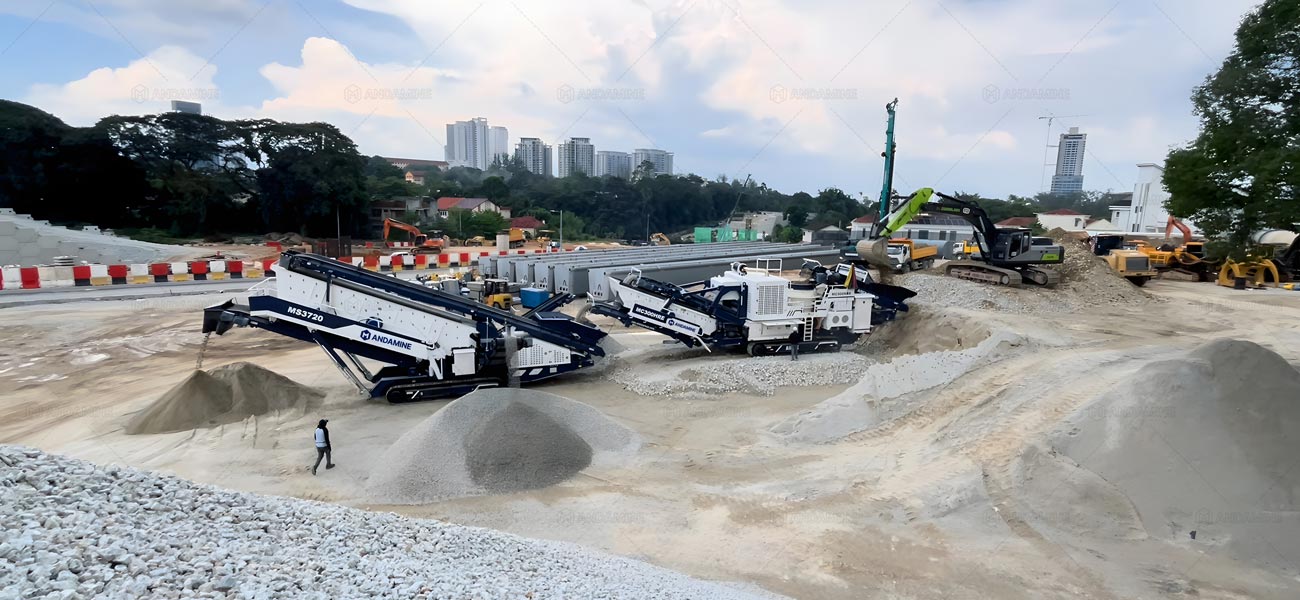
The journey of aggregates in Latin America, from their origin in a quarry to their final use in a concrete mixing plant or asphalt facility, is undergoing a profound transformation. Traditionally, this supply chain has been linear and centralized: large, stationary quarries feed distant construction sites via long, costly trucking routes. However, a confluence of economic, logistical, and environmental factors is disrupting this model, creating a new paradigm where flexibility and proximity are paramount. This shift is fundamentally altering the investment calculus for aggregate producers and contractors. No longer is the primary question merely about crushing capacity; it is about operational agility. At the heart of this transition is the strategic re-evaluation of crushing equipment, with the mobile stone crusher(trituradora movil de piedra) moving from a niche tool to a central component of a resilient and profitable supply chain strategy.
The Drivers of Change in the Aggregate Supply Chain
Several powerful trends are converging to reshape how aggregates are sourced, processed, and delivered across the region. Understanding these drivers is essential for making informed equipment investments.
First, rampant infrastructure development and urbanization are creating demand in geographically dispersed locations. Mega-projects like ports and highways coexist with countless smaller housing and road projects scattered across regions. A fixed plant often cannot serve these fragmented markets economically due to prohibitive transport costs. Second, environmental and social governance (ESG) pressures are intensifying. Communities are increasingly resistant to the dust, noise, and permanent landscape alteration of large-scale quarries, especially near urban areas. Obtaining permits for new fixed sites has become a lengthier and more uncertain process. Third, the push for sustainability is creating value in urban ore. Recycling construction and demolition (C&D) waste into recycled aggregates is now a viable business, but this material is generated in city centers, far from traditional quarrying zones.
These drivers collectively prioritize a supply chain that is shorter, more adaptable, and less environmentally intrusive. This new reality demands equipment that can capitalize on localized, temporary, or recycled material sources.
The Strategic Rise of Mobile Crushing Solutions
In this evolving landscape, mobile crushing and screening plants offer a compelling solution that directly addresses these new market imperatives. Their core advantage is the ability to bring the processing plant to the material source, rather than the other way around. This simple reversal of logistics unlocks multiple layers of value.
Decentralizing Production: The Economic Imperative
For a contractor working on a remote highway section or a mining company needing aggregates for on-site infrastructure, setting up a temporary crushing circuit with a mobile stone crusher is often the only economically viable option. The savings in trucking costs—which can represent over 50% of the delivered aggregate price—can justify the equipment investment on a single project. This model turns widely available, low-value raw rock deposits into high-value construction materials right where they are needed.
Enabling the Circular Economy on Site
The growth of C&D waste recycling is a major opportunity. A mobile impact rock crusher(trituradora de rocas) can be deployed directly at a demolition site or a designated urban recycling hub. It processes concrete, asphalt, and masonry rubble into specification aggregates for backfill, road base, or new concrete. This not only diverts waste from landfills but also creates a local, sustainable material source that decouples production from distant quarries. Investing in mobile equipment positions a company to capture this growing market segment.
Flexibility as a Risk Mitigation Tool
The ability to relocate equipment is a powerful hedge against market shifts. A fixed plant is a bet on a single deposit and a single market for a decade or more. A mobile fleet, however, can be moved to follow demand, exploit new temporary deposits, or pivot from producing virgin aggregate to processing recycled material as market conditions change. This flexibility reduces long-term investment risk.
Key Investment Considerations for Mobile Crushing
Moving from a fixed-plant mindset to a mobile one requires a different approach to capital allocation and operational planning. Here are critical factors for investors and operators.
Matching the Machine to the Material and Mission
Not all mobile crushers are the same, and selecting the right type is crucial for profitability.
- For Primary Crushing of Hard Rock: A tracked jaw crusher is the robust, go-to solution for breaking down blasted granite, basalt, or hard limestone crusher(trituradora de piedra caliza) applications. It sets the stage for further reduction.
- For Secondary/Tertiary Crushing and Shape: Mobile cone crushers are ideal for producing precisely graded aggregates for concrete and asphalt from pre-crushed material. They offer excellent control over the final product's shape and size.
- For Recycling and Soft Rock: A mobile impact rock crusher excels at processing recycled concrete and asphalt, as well as softer materials like limestone. It offers high reduction ratios and good cubical shape in a single machine.
The choice between tracked (high mobility on-site) and wheeled (easier highway transport) platforms is another key decision based on the frequency of relocation.
Analyzing the Total Cost of Ownership (TCO)
The business case for a mobile stone crusher must look beyond the purchase price. A thorough TCO analysis should include:
- Fuel Efficiency: Mobile plants with modern, tier-compliant engines and efficient hydraulic systems offer significant savings over their lifespan.
- Maintenance and Downtime: Reliability and easy service access are paramount. Potential revenue lost during downtime often far outweighs the cost of purchasing a more reliable brand.
- Resale Value: Quality mobile equipment from reputable manufacturers holds its value remarkably well in the active Latin American used-equipment market.
- Production Versatility: The ability of one plant to produce multiple saleable products (e.g., various aggregate sizes, rip-rap, quarry waste) enhances its revenue-generating potential.
Navigating Operational Logistics
Success requires more than just the machine. Investors must plan for:
- Site Logistics: Ensuring adequate space for the plant, feeders, stockpiles, and loading area.
- Permitting: While often simpler than for fixed quarries, temporary operating permits for noise, dust, and water management are still required.
- Skilled Operators: Technicians who understand both crushing principles and mobile equipment maintenance are essential for maximizing uptime and product quality.
Conclusion: Building a Resilient Future
The Latin American aggregate supply chain is being rewritten. The old model of centralized, fixed production is being supplemented—and in many cases, supplanted—by a dynamic, distributed network of mobile processing nodes. This shift presents a clear investment signal. Capital is increasingly flowing towards flexible, efficient mobile stone crusher solutions that can exploit local rock deposits, transform urban waste streams, and serve evolving infrastructure demands with agility.
For companies in the sector, the path forward involves recognizing that the value chain now extends "from the temporary mine to the mixing plant." Investing in mobile crushing is not just an equipment purchase; it is an investment in a strategic capability to build shorter, smarter, and more sustainable supply chains. It is an investment in the resilience needed to thrive in the dynamic markets of Latin America's future.

Comments
No comments yet. Be the first to react!