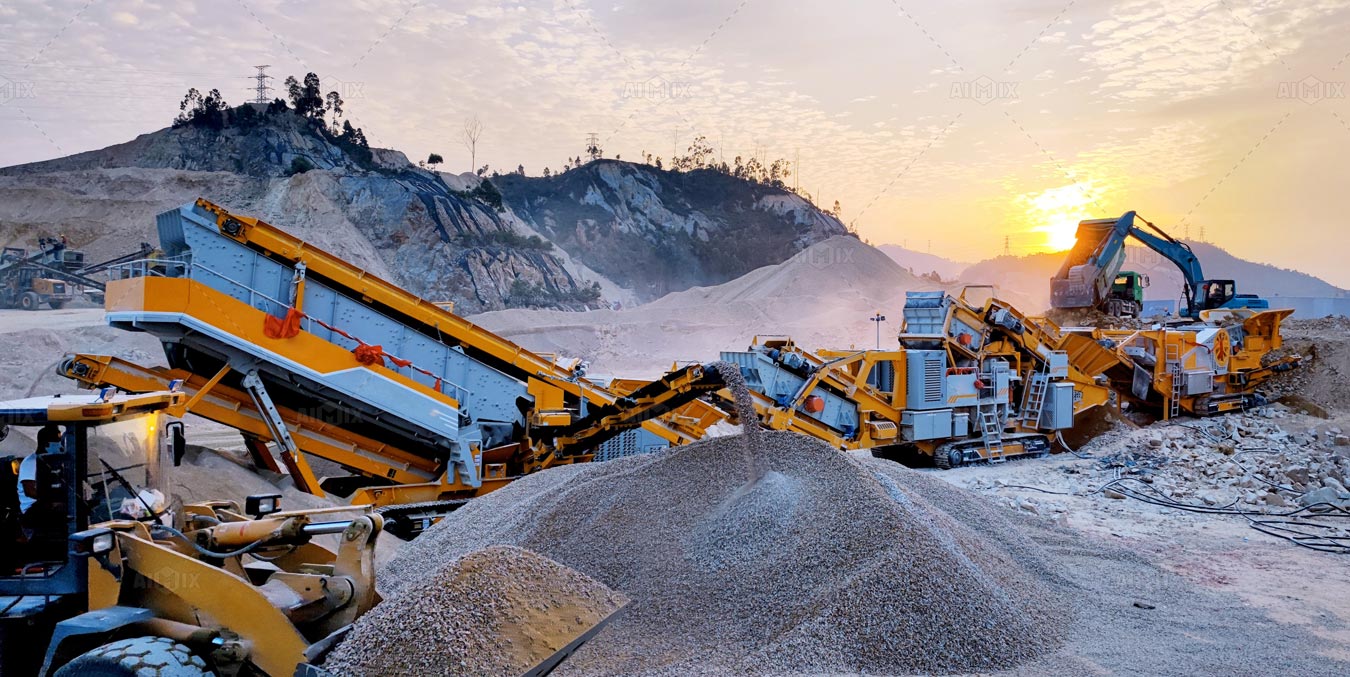
Operating a successful aggregate production business in Latin America requires a delicate and strategic balance. On one side, there is the immense pressure of rapid urbanization, infrastructure development, and the consequent high demand for quality construction materials. On the other, there is a region-wide strengthening of environmental stewardship and increasingly stringent construction standards. For operators, the central question is how a modern stone crusher plant(planta de trituracion y cribado) can be a solution rather than a liability, efficiently producing high-spec aggregate while fully complying with local laws. The answer lies in technological adaptation, proactive environmental management, and a deep understanding of regional market requirements. This article explores the practical strategies that allow aggregate producers to thrive in this dynamic Latin American context.
Navigating the Regulatory Landscape in Latin America
The regulatory environment across Latin America is diverse, with each country having its specific framework. However, common threads are emerging, driven by public demand for sustainability and alignment with global best practices.
Key Areas of Environmental Compliance
Several critical regulatory domains directly impact the design and operation of every aggregate plant(planta de agregados) in the region.
- Air Quality and Dust Control: Strict limits on particulate matter (PM10 and PM2.5) emissions are a top priority. Uncontrolled dust from crushing, screening, and material transfer is a primary concern for regulators and communities alike.
- Water Management and Usage: Regulations govern the use of water for dust suppression and material washing, often mandating closed-loop recycling systems to prevent contamination and minimize freshwater extraction, a crucial factor in arid regions.
- Noise Pollution Limits: Permissible noise levels, especially for operations near residential areas, are strictly defined, influencing equipment selection and site layout.
- Operational Licensing: Securing a permit typically requires a comprehensive Environmental Impact Assessment (EIA), a detailed site rehabilitation plan, and commitments to ongoing monitoring.
Adhering to Construction Material Standards
Alongside environmental rules, the produced aggregate must meet rigorous technical specifications. National standards (like Brazil's ABNT NBR, Mexico's NMX, or Peru's NTP) define requirements for particle size distribution, shape, cleanliness, and strength for use in concrete and asphalt, directly influencing plant configuration.
Technological Solutions for Compliance and Efficiency
Modern engineering provides the tools to build an stone crusher plant that is both highly productive and environmentally sound. The integration of specific technologies is no longer optional but a necessity for market entry.
Integrated Dust Suppression Systems
Effective dust control is engineered into the plant's core design. For a stationary aggregate plant, this includes fixed fog cannon systems at transfer points, encapsulation of crushers and screens, and baghouse filters. A modern mobile stone crusher plant(planta de trituracion movil) achieves this with self-contained pressurized misting rings and flexible enclosure panels, ensuring compliance even on temporary sites.
Noise Abatement and Vibration Control
Meeting strict noise ordinances requires a combination of equipment choice and physical barriers. Electrically driven crushers are inherently quieter than diesel-hydraulic units. Furthermore, sound-dampening enclosures around generators, crushers, and screens, combined with strategic placement of acoustic barriers, are standard practices for responsible operators.
Closed-Loop Water Management
To address both water scarcity and anti-pollution regulations, leading plants implement zero-discharge systems. Process water from washing and dust suppression is channeled into sedimentation ponds or mechanical clarifiers. The cleaned water is recirculated, drastically reducing net consumption and eliminating contaminated runoff, a key factor in maintaining an operational license.
Optimizing Plant Design for Quality and Standards
Meeting construction standards is fundamentally about process control and precision. The right plant configuration ensures the aggregate not only exists but excels in its application.
Producing Specification-Grade Aggregate
The demand for high-strength concrete and durable asphalt requires superior aggregate. A multi-stage crushing circuit, featuring a robust primary crusher followed by cone crushers and often a Vertical Shaft Impactor (VSI) as a tertiary stone crusher, is essential. This configuration produces the cubical, well-graded particle shape needed for optimal mechanical interlock and strength in the final construction material.
The Strategic Advantage of Mobile Configurations
The mobile stone crusher plant offers unique benefits for compliance in Latin America. By moving production directly to the urban construction site or a remote project location, it drastically reduces truck transportation, cutting associated emissions, road wear, and community disturbance. This logistical efficiency is increasingly viewed favorably in environmental permitting processes.
Precision Screening and Washing
Advanced screening decks ensure exact separation into required size fractions. For projects needing high-spec concrete, integrated log washers or attrition scrubbers remove clays and silts that can compromise concrete integrity, ensuring the final product from the aggregate plant exceeds local material standards.
Towards Sustainable and Compliant Operations
The path forward for aggregate producers in Latin America is clear. A compliant and successful stone crusher plant is built on a foundation of modern technology, proactive environmental management, and a commitment to quality. By viewing regulations not as barriers but as frameworks for sustainable business, operators can build a competitive advantage. Investing in dust control, water recycling, and precision crushing technology for a stationary aggregate plant or a versatile mobile stone crusher plant is an investment in long-term operational viability and community acceptance. Ultimately, the plants that will lead the market are those that seamlessly blend material production with environmental responsibility, delivering the essential ingredients for the region's growth while protecting its natural heritage.

Comments
No comments yet. Be the first to react!